
A better Tautline Hitch
Category Archives: Tips for the Backcountry
Tarp Shelter Set Up Options
From our friends at Equipped.org. Extensive article on using tarps to make shelters.
Equipped
Oral Re-hydration solution
Oral rehydration solution
Tho this solution was developed primarily to treat dehydration
due to disease, it works well for quickly getting fluid into the
blood, faster than plain water when you are depleted by sweating. A home made sports drink.
“Basic solution
Where ORS sachets are not available, home-prepared solutions are typically used. While many different recipes exist to increase palatability (e.g. adding flavor, citrus, savory, etc.), all are based on a standard ratio of water, sugar, and salt.
A basic oral rehydration therapy solution is composed of:[20][21]
30 ml (6 level tsp) of sugar
2.5 ml (1/2 level tsp) of salt, dissolved into
1 litre (4.25 Cups) of clean water
Note that these expedient rehydration mixtures do not replenish potassium, and usage over long term may result in hypokalemia. To obtain some potassium, 125 ml (4 fl oz) of orange juice or some mashed banana can be added to the mixture.[22]
”
Hangable Food Sacks
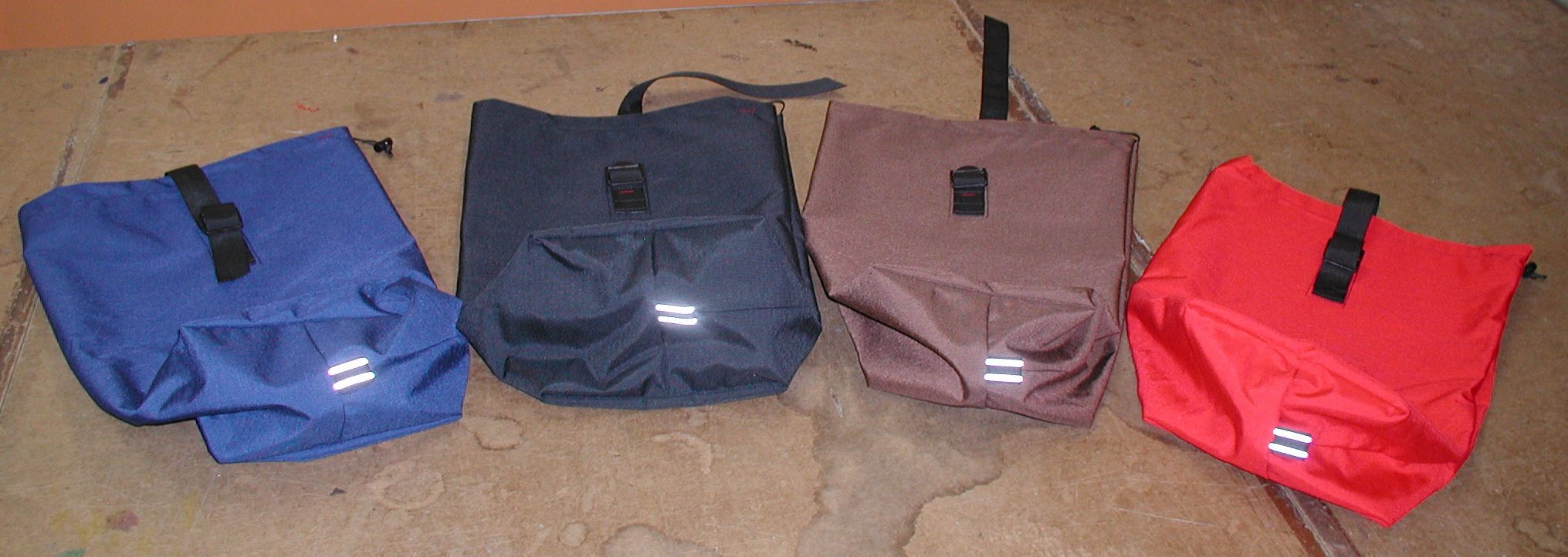 Large stuffsacks to hang your food out of reach of varmints. Custom made for school or troop. Photo shows the extra large version made of 1000 denier Cordura . Holds about two weeks worth of dried food. Comes with webbing and double pass nylon buckle so only one bag need be detached at a time from your hang. Retro-reflective web on bottom so you can easily find your hang in the night to check for critters. Various fabrics available including 30d, 210d, 420d and 1000d coated nylon. Even Cuben Fiber if you have to have the lightest. Quantity pricing.
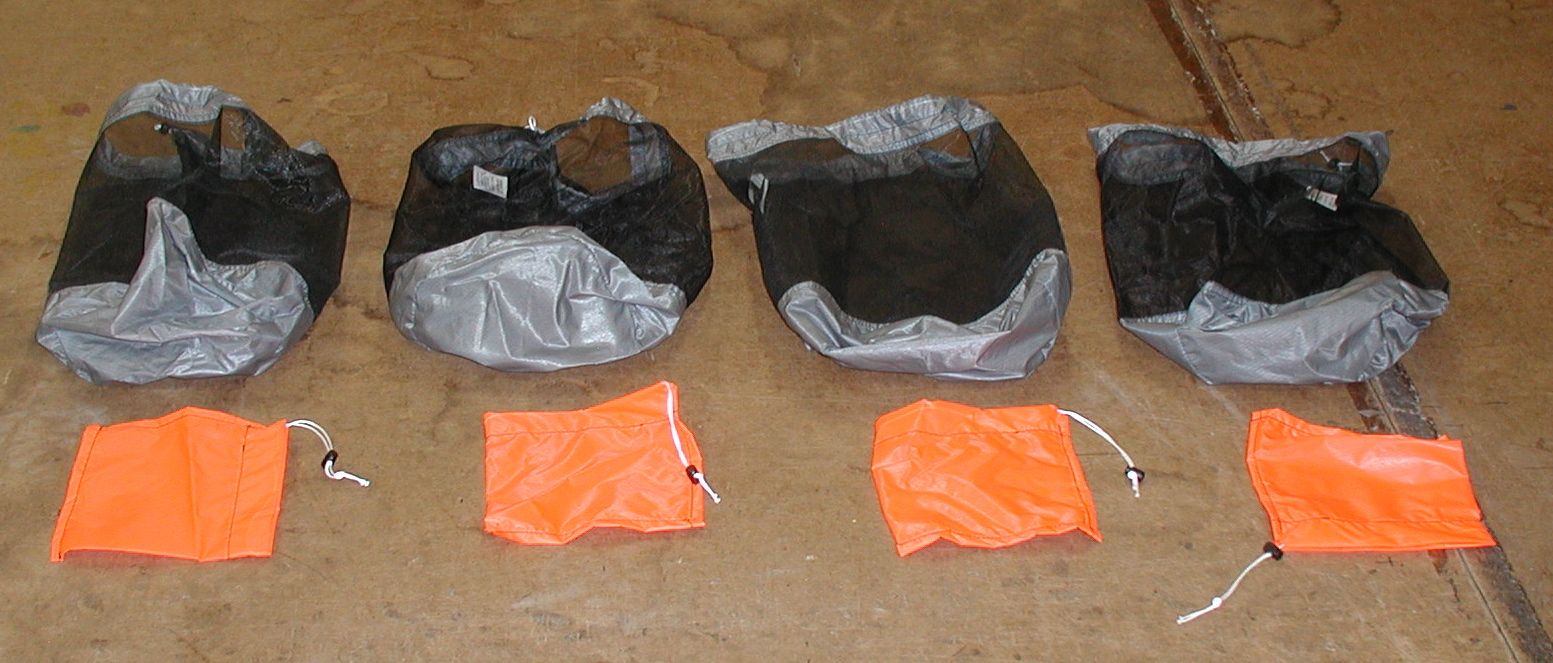
These four ultralight sacks with orange throw bags were made for Backpackinglight. Silnylon and Nanoseeum.
do@owareusa.com.
Soft Stretchers
Bring a collapsible, packable stretcher in to the backcountry.
Made for Conservation Corp group. Call for information.

Rescue Bivysack/VBL
Used by Search and Rescue Skiers as a compact and quick tool to get a wet person out of the wind and wet. Wind and waterproof coated nylon sack stops evaporative and convective heat loss for the whole body in a super tough and compact 7 ounce package. The orange colors make a good signaling device and wind sock. Dimensions 85″ length, 71″ shoulder girth, 48″ inch foot girth. Can be compacted to fist size. Also works well as a roomy vapor barrier liner inside a sleeping bag to prevent condensation in the insulation. Silicone coated 30d type 66 nylon in either blaze orange or black. Group discounts available. Call 888-292-4534 for more info.

Cuben Fiber and Silnylon pull test
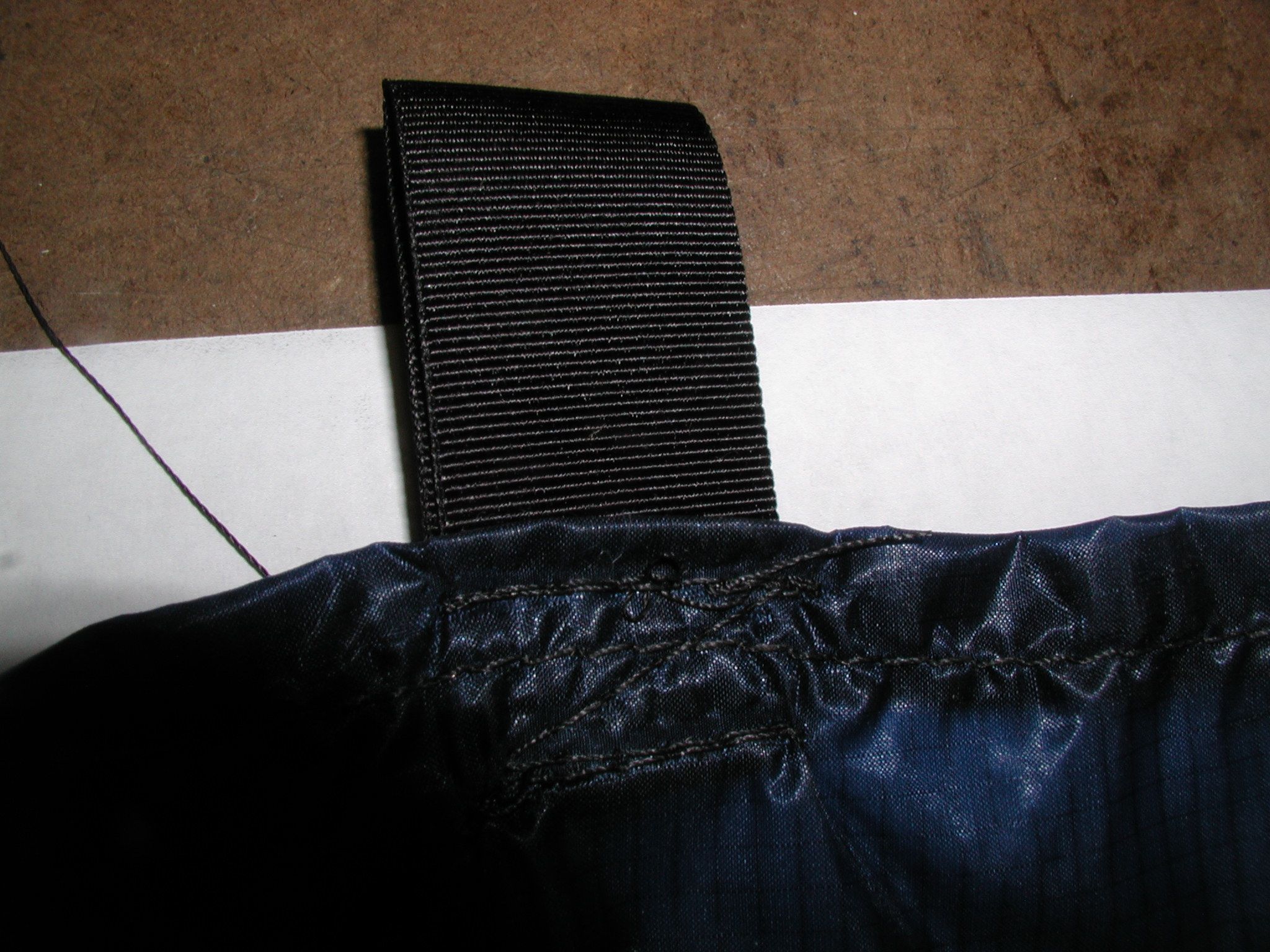
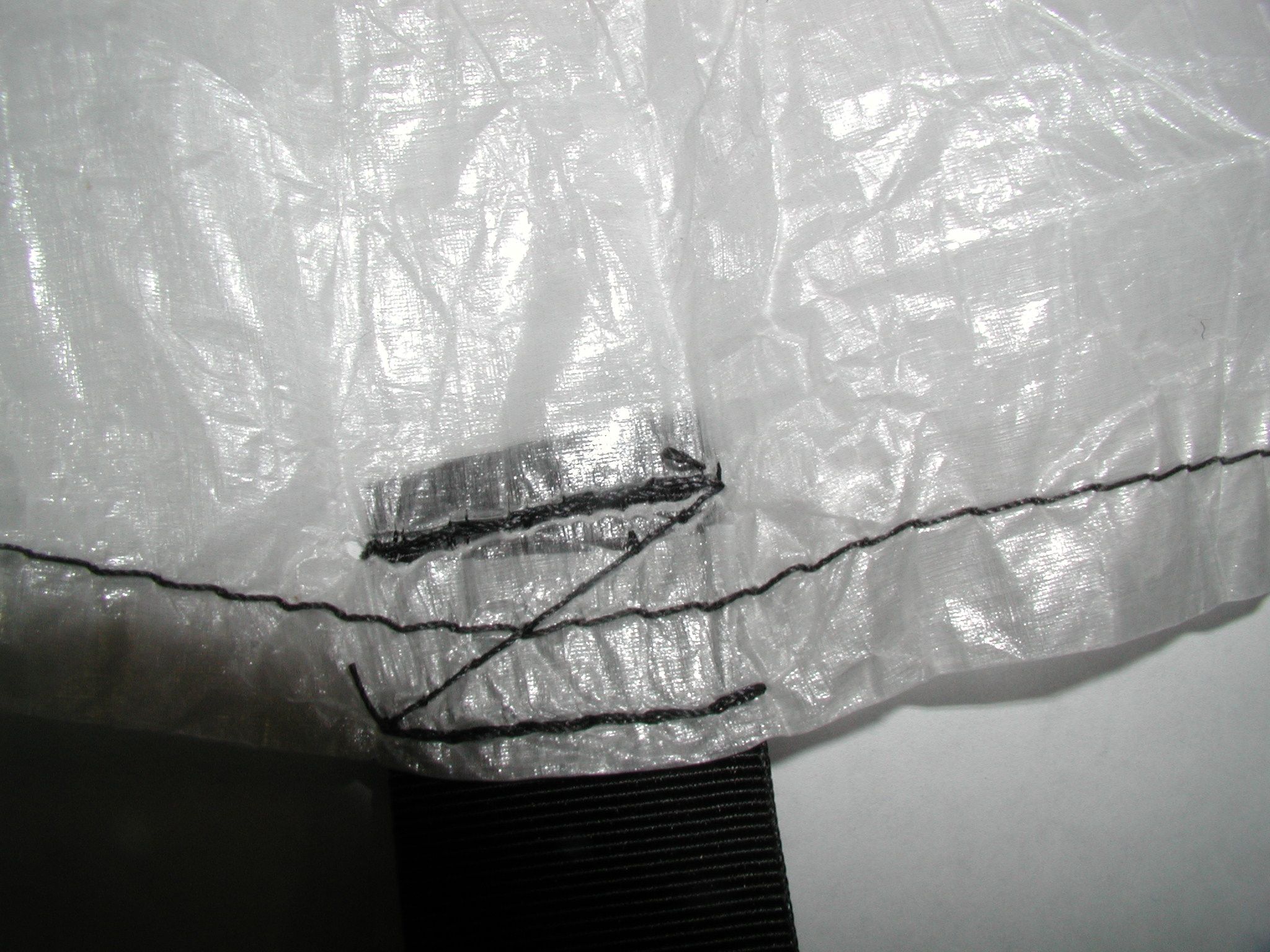
Cuben Fiber .5 oz. sewn to Silicone coated nylon 30 denier and pulled to failure (42 lbs).
Tie outs were not reinforced but held while two rows of straight stitching on a lap seam failed
at the nylon, cuben AND stitching. This is 7 lb tensile strength thread.
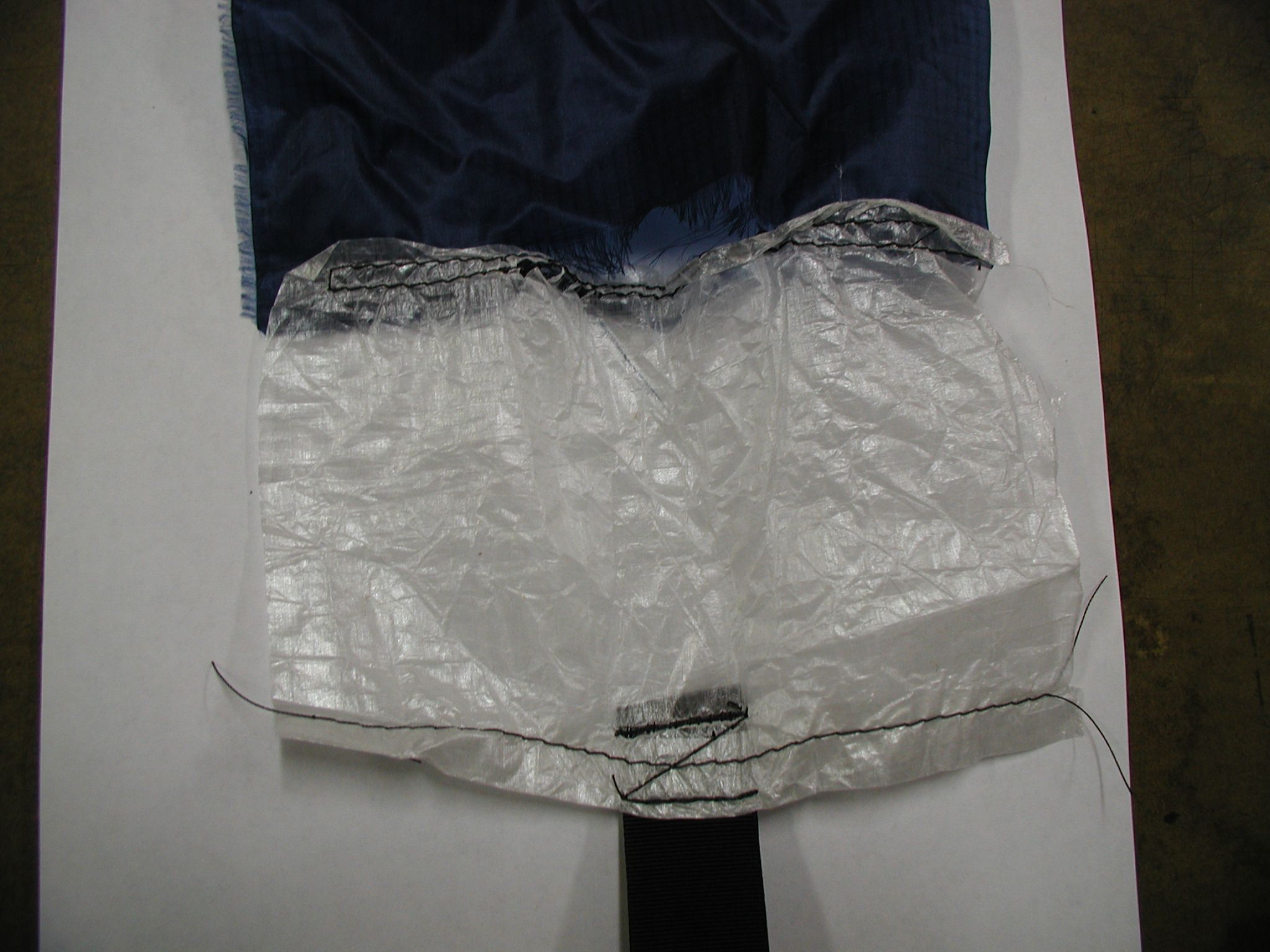
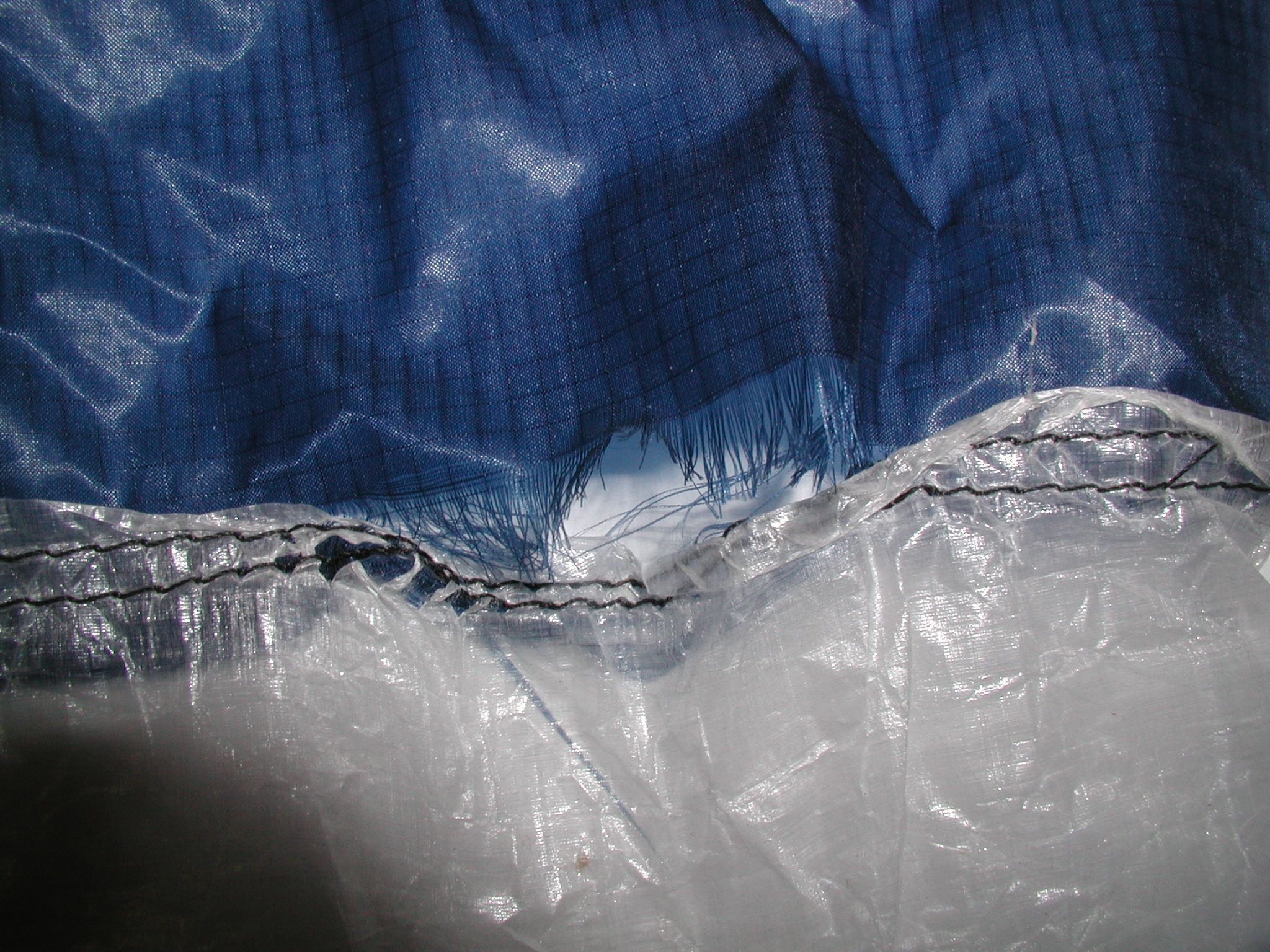
Cuben Fiber pull tests
Cuben Fiber .7 oz sewn to Cordura 1000 denier nylon with 4 rows of straight stitch and to itself with flat felled and glued seam. Shock loaded to failure (body weight plus a jump).
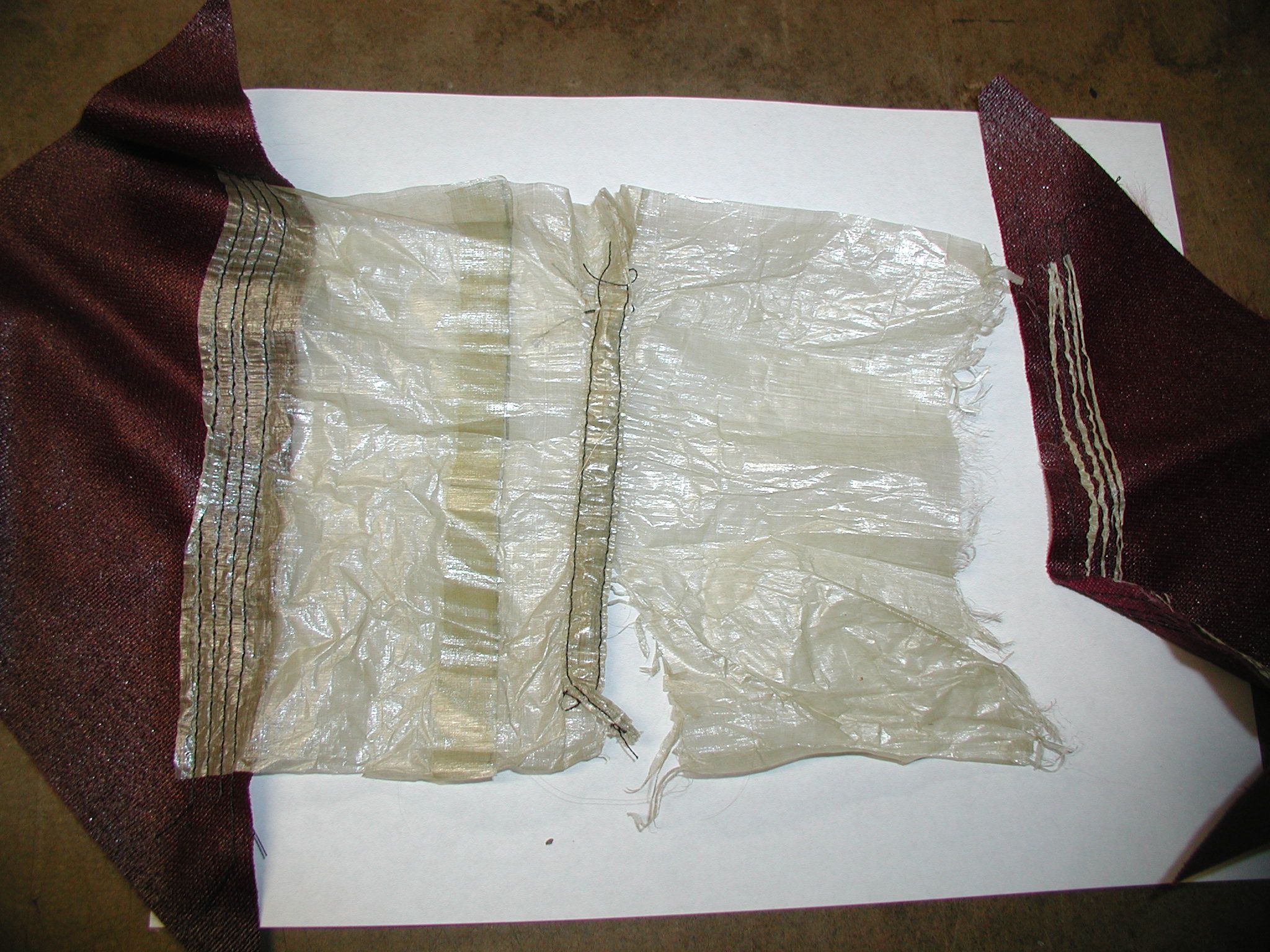 Notice the tie out webs were not the failure point. Also that a flat felled seam with only 2 rows of stitching proved stronger than a simple lap felled seam with 4 rows of stitches. The glued seam did even better than that.
Foam sleeping pads, layered
Since it is often desirable for  greater padding under the hips and shoulders
I have tried gluing  layers of closed cell foam pad together.
I found that this can be accomplished with contact cement purchased at the
hardware store. It makes a very strong bond and you only need a few dots of it
to hold things together.

By overlapping pieces, I can now make myself a custom pad to my height and
width with padding at just the spots I need. This way I eliminate a ground
sheet, and have a warm full length pad  with a surface that doesn't promote
condensation.

As weather turns colder, you can add additional layers of foam.

One of my customers uses grommets and toggles in his hammock to keep the pad
in place.

Foam pads for sale.
Filed under Do It Yourself, Fabric, Tips for the Backcountry
Compression Stuffsacks
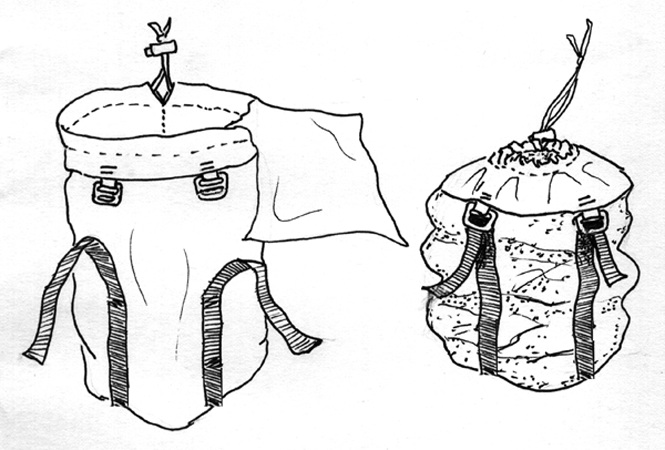
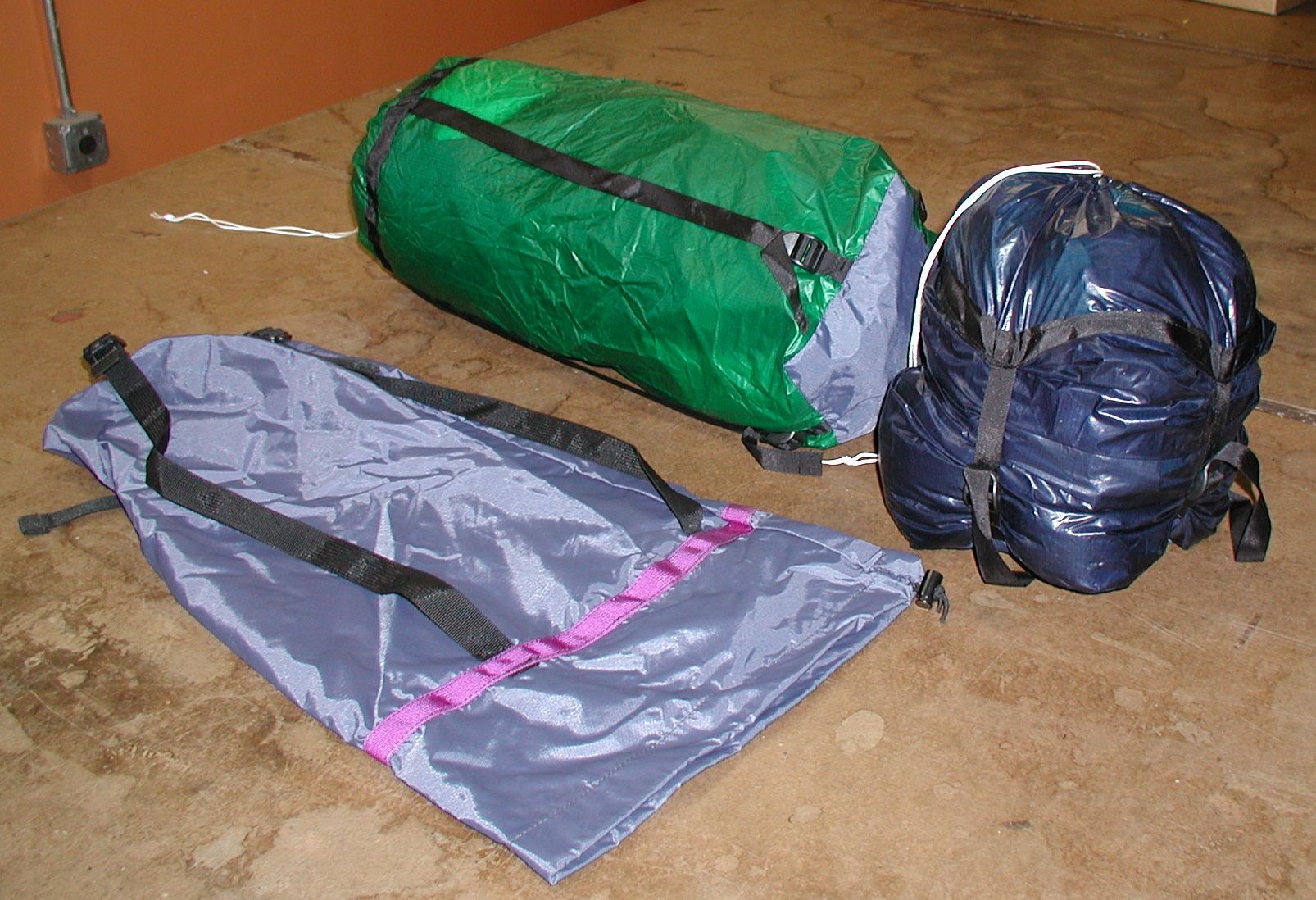
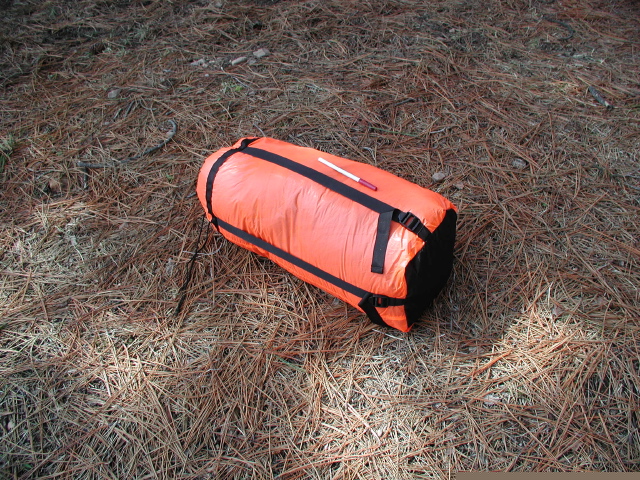
A long favorite with outdoor schools, compression sacks help get that winter bundle of wool and fleece, or a thick synthetic sleeping bag, under control. Especially nice if you have cold fingers. Simply stuff, then pull the straps through the buckles to squeeze it down till it fits in your pack.
http://shop.bivysack.com/product.sc?productId=97&categoryId=8
Filed under Tips for the Backcountry
 Oware
Oware 