
From 1972, collection of backpacking advice.
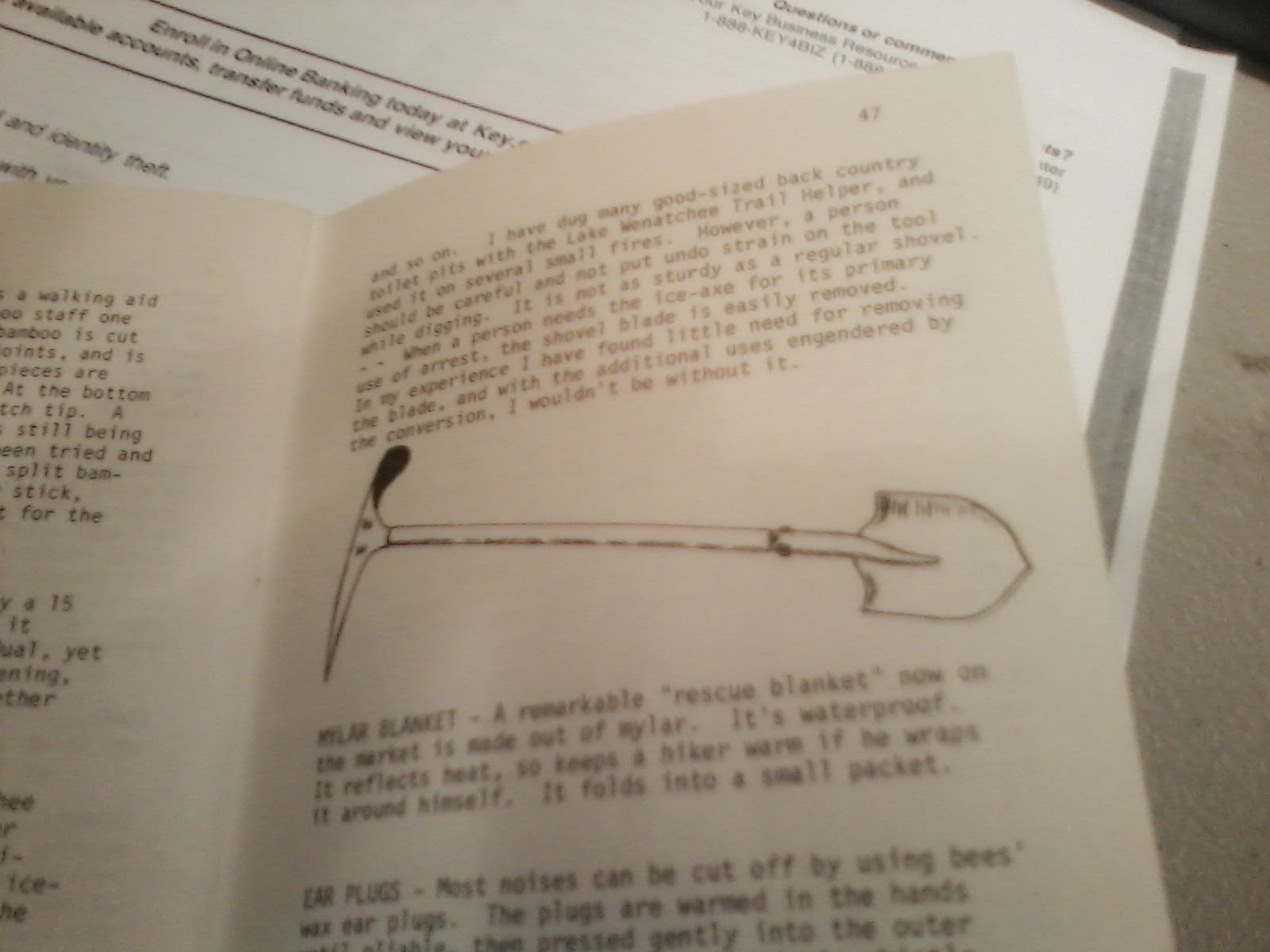
A photo from the book of “The Lake Wenatchee Trail Helper”
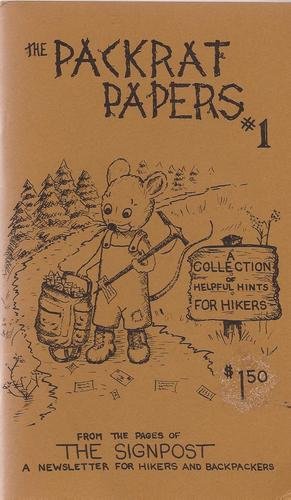
From 1972, collection of backpacking advice.
A photo from the book of “The Lake Wenatchee Trail Helper”
Some of nylon’s stretch can be mitigated by how the fabric pieces are cut out. Curves etc. in seams and hems can help maintain shape. I far as I know, nylon is still the fabric of choice for shock absorption (parachutes, ropes) and does a good job for shelters suddenly loaded by wind or snow.
It does sag a bit at times from temperature drops or moisture. In something like a pyramid tarp, having a method for adjusting the pole upward to take up slack from within the shelter is nice. If your tarp pole is not adjustable, this could be as simple as having a stone handy to place underneath the pole. If you use outside shear poles, reaching under the hem and pulling the two pole bottoms inward can do the same.

Two wooden poles can be lasted to hold the tarp up from outside.
Be sure in any case or fabric type you stake out the hem in the right shape. On a symmetrical 4 sided mid, a diamond shape instead of a perfect square will produce saggy walls with any fabric. Floored shelters are easier to get the stake out pattern correct. On a floorless shelter you could tie tiny cords corner to corner to insure proper and repeatable layouts.
Before snow machines, the internet and global warming. One chapter for each month of the year,from Peter Freuchen Danish explorer, author, journalist and anthropologist. A remarkable man, he wrote several books.
“A famous Arctic explorer and an eminent Danish ornithologist have collaborated to produce a most unusual month-by-month account of how life goes on in the Far North. By tracing the exquisitely adjusted, intergrated relationships that hold climate and currents and living creatures, permafrost and plants, in balance, the authors have documented the great design of arctic ecology and shown how profoundly it is tied to the rest of the world.”
http://www.goodreads.com/book/show/6353917-the-arctic-year
“In 1910, Knud Rasmussen and Peter Freuchen established the Thule Trading Station at Cape York (Uummannaq), Greenland, as a trading base. The name Thule was chosen because it was the most northerly trading post in the world, literally the “Ultima Thule“.[6] Thule Trading Station became the home base for a series of seven expeditions, known as the Thule Expeditions, between 1912 and 1933.
The First Thule Expedition (1912, Rasmussen and Freuchen) aimed to test Robert Peary‘s claim that a channel divided Peary Land from Greenland. They proved this was not the case in a remarkable 1,000 km (620 mi) journey across the inland ice that almost killed them.[7] Clements Markham, president of the Royal Geographical Society, called the journey the “finest ever performed by dogs.”[8] Freuchen wrote personal accounts of this journey (and others) in ‘Vagrant Viking’ (1953) and ‘I Sailed with Rasmussen’ (1958). He states in ‘Vagrant Viking’ that only one other dogsled trip across Greenland was ever successful.”
http://en.wikipedia.org/wiki/Peter_Freuchen
Filed under Good Links, Tips for the Backcountry
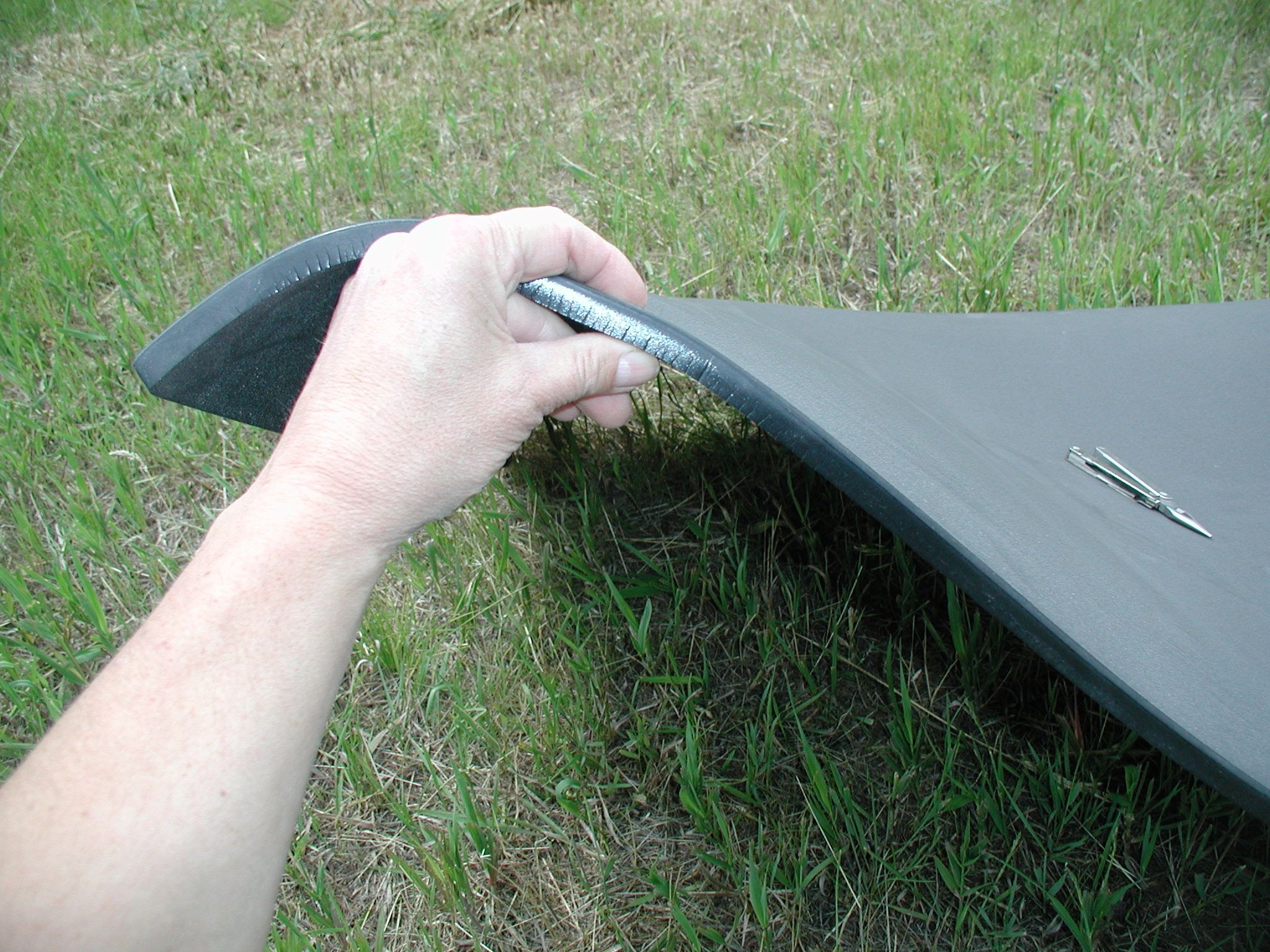
Plastazote Foam
Winter Thickness of 1/2″ (1.3mm)
Dark Grey
Closed Cell Foam Waterproof to a Hydrostatic Head of 3500 mm.
Will not go flat if punctured.
One of the lightest options for your PCT thru hike.
Add it to your summer pad for a winter trip.
R value of 2.
Without dimples or ridges that collect snow in your snow shelter or rain under your tarp and soak your sleeping bag.
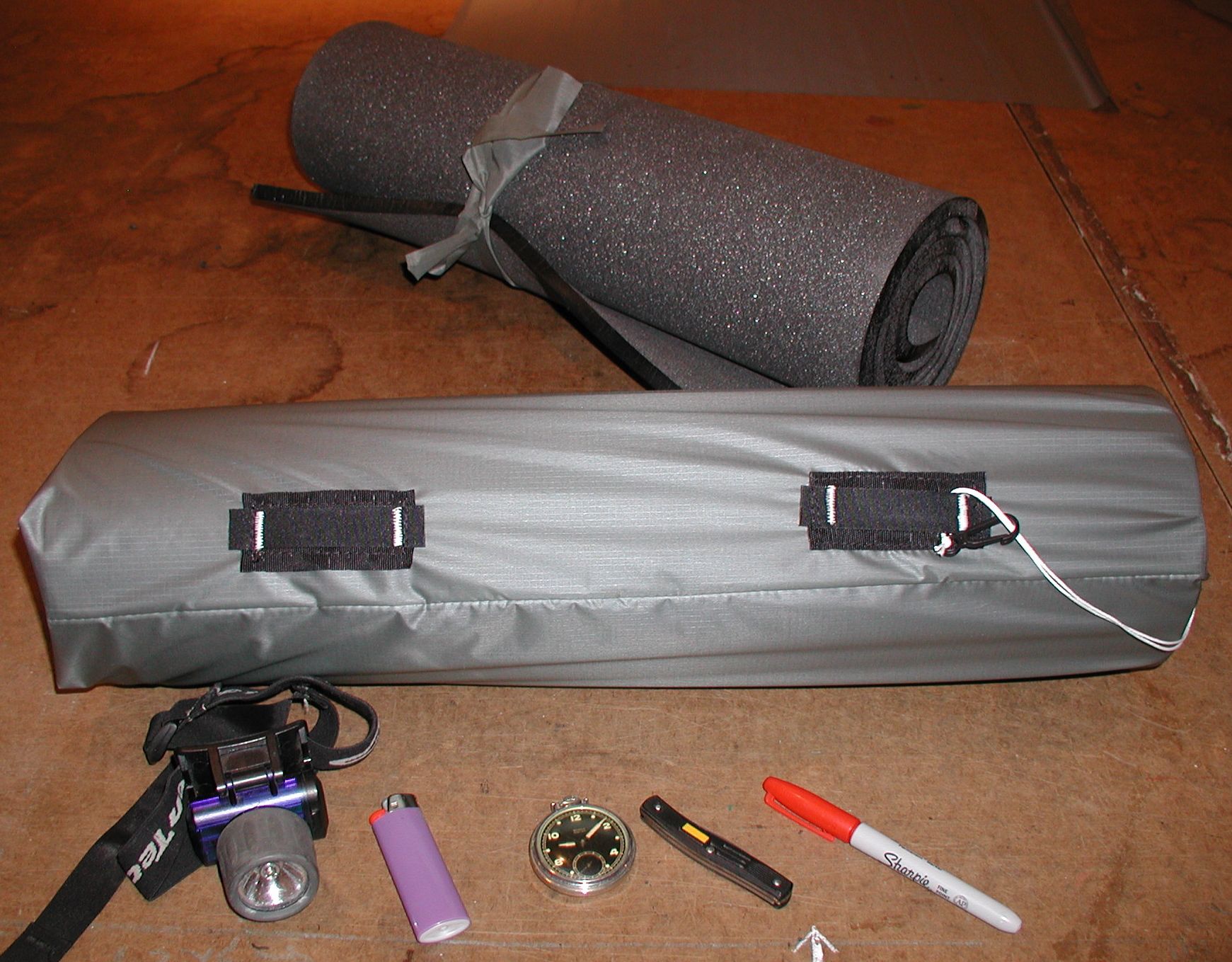
Stuffsack (with strap loop for outside carry on your pack or on top of your bike panniers) available on some sizes. Drawstring has keeper mitten hook for outside carry of pad on pack. Stuffsack weight 1 oz.
Use the double wide in hammocks, for two people, or trim and layer for one person to extra width or cushioning.
Three sizes from two person width to torso size.
Torso size 20x40x1/2″ –weight 5 ounces
One person size 20x60x1/2″ –weight 7.5 ounces
Two person size 40x60x1/2″ –weight 15 ounces
Available in the USA only due to shipping costs on bulky items.
Free Shipping in the USA.
http://shop.bivysack.com/Foam-1-2-Thick-130mm-Sleeping-Pads-1FoamWinter.htm

On many Outward Bound courses, toilet paper was left at home and local natural items substituted to cut down on backcountry environmental impact. In some desert environs, where the most popular substitutes of snow or vegetation weren’t available, toilet paper was carried and then burned or carried out. It should be obvious (but unfortunately not to all) that burning toilet paper is a great hazard in forest fire conditions, so carrying it out was then prefered.
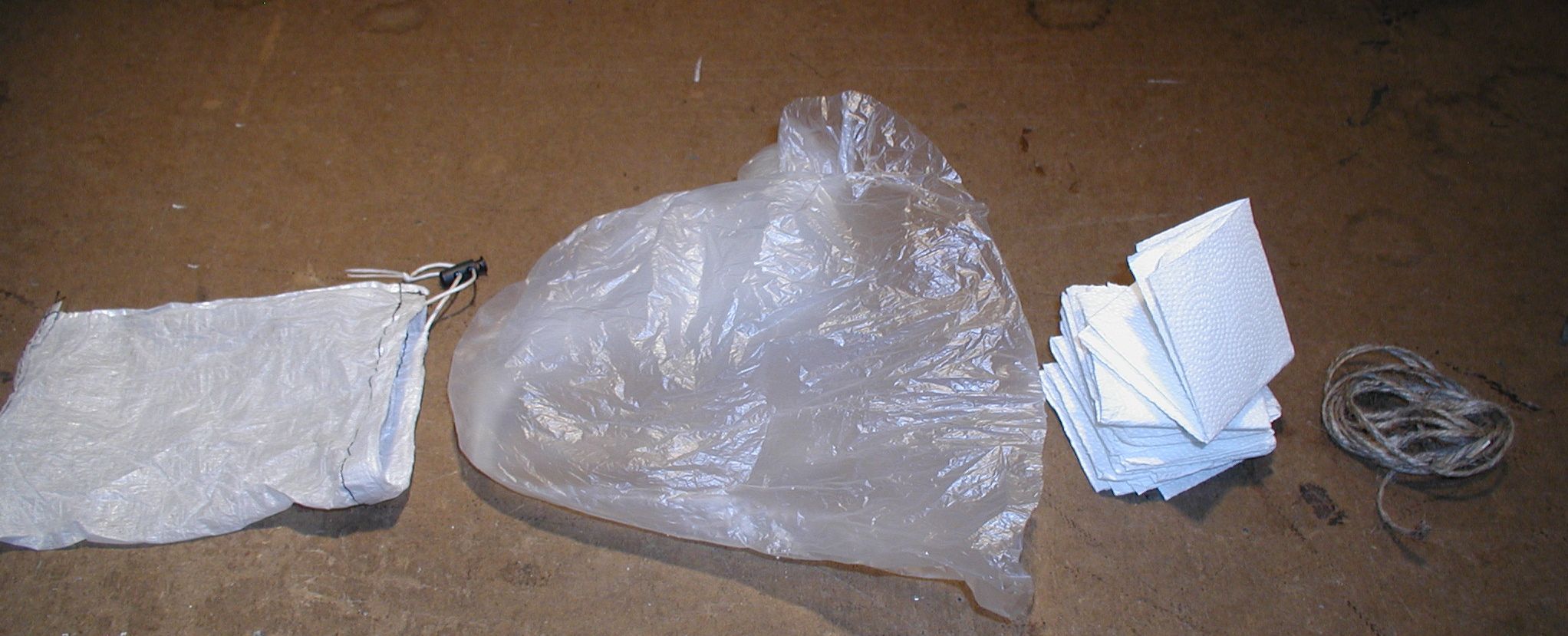
In some damper times and places, burning works well. Here is what I like to bring (in addition to using snow and other substitutes). Weighs 23 grams and is enough for 2 weeks.
Tiny cuben fiber stuffsack lined with thin plastic for water tightness.
14 half sheets of paper towel (more durable than tp and burns readily)
7 feet of jute cord
I cut a 6″ section of the jute cord and fuzz it up and use it to catch a spark from a mish metal flint which then catches the paper towel and with care will burn the whole thing to ash.
I bought 4 MSR ground hog stakes for my family to use with a pyramid tarp.
This is a quick simple case you can make to protect the rest of your gear from the stake points.
No drawcord, just a bit of cordura with an opening partly down one side. With 50 feet of light nylon or polyester cord to tie around rocks, logs and trees, I have what I need to anchor the tent in heavy weather.


Filed under Do It Yourself, pyramid tarp, Tips for the Backcountry
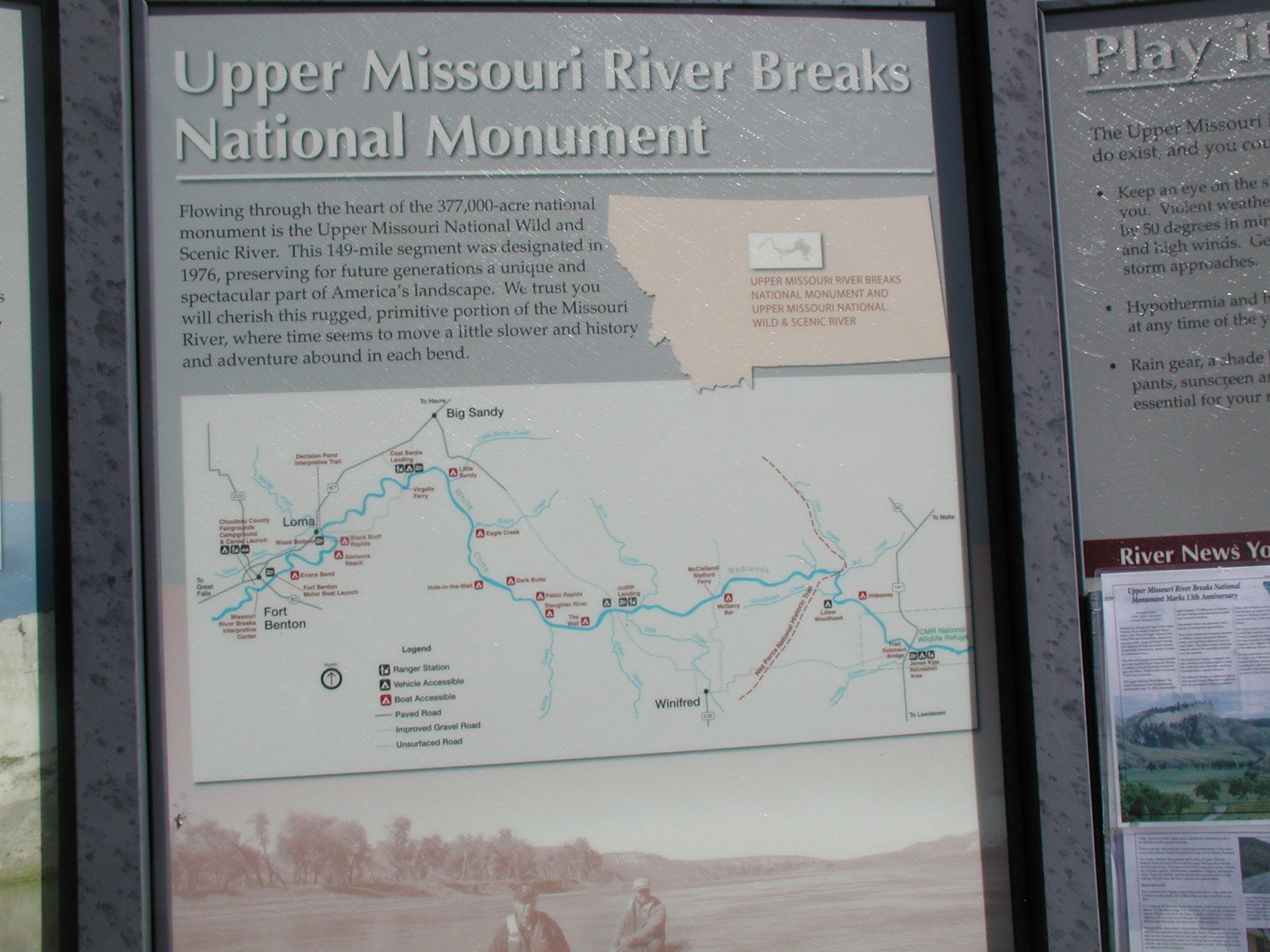
Canoeing the Missouri Breaks

Water at put in was safe if not tasty.
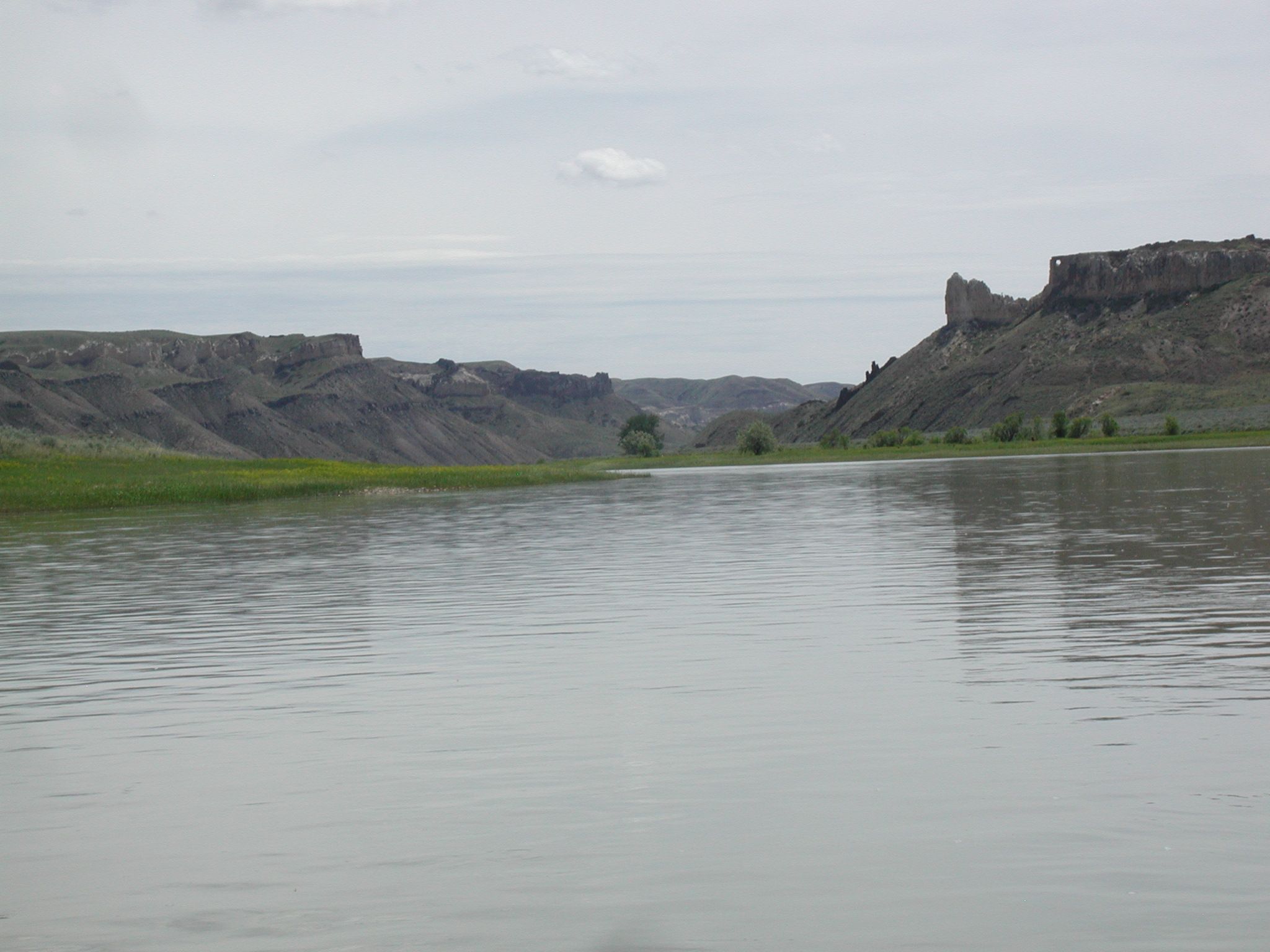
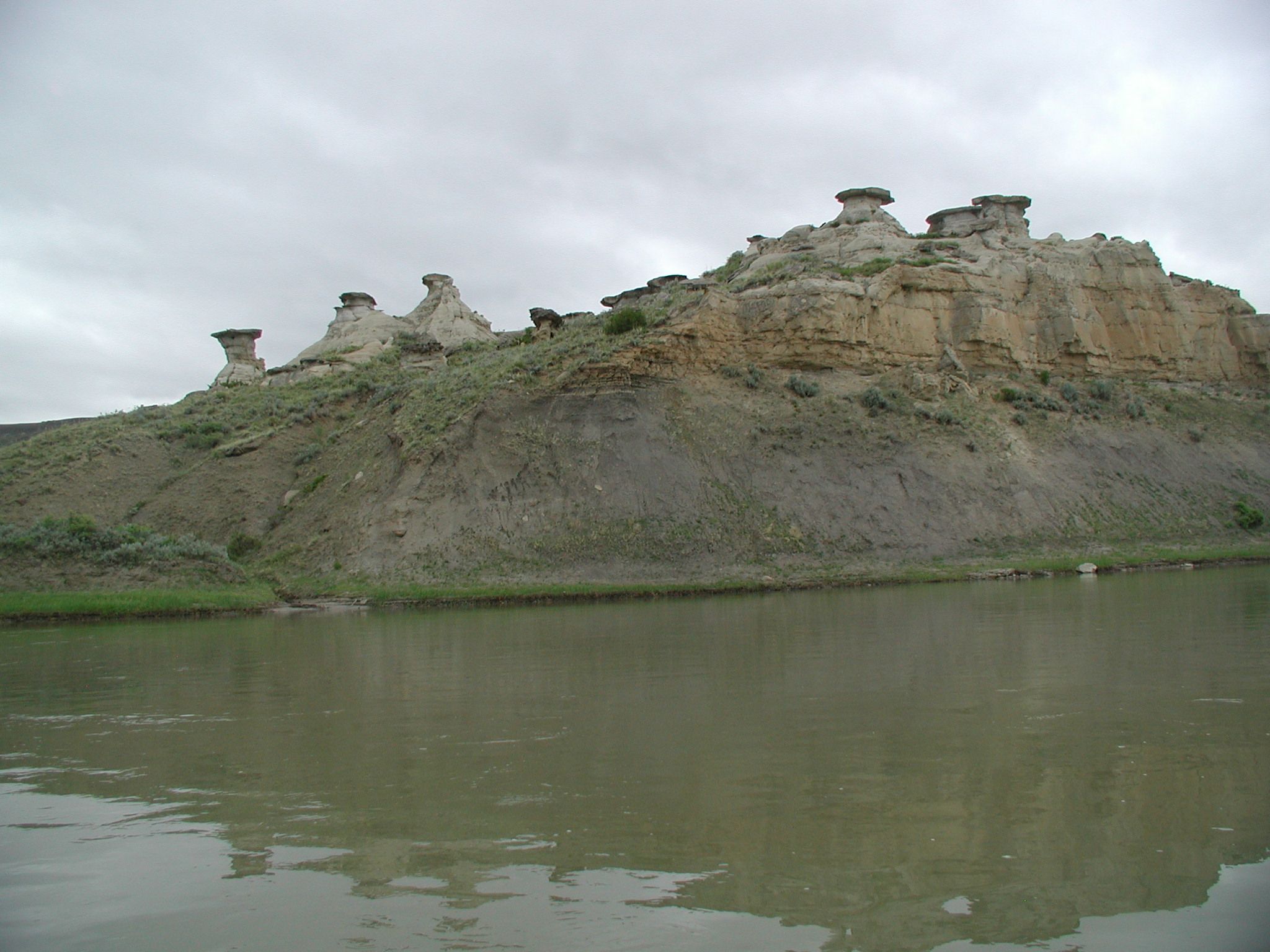
Broad, gentle river with some current. Good for beginning canoe-ists. Hoodoo, and dike formations along the river.

Oware pyramid and tarp used together for darker shade on a hot day.
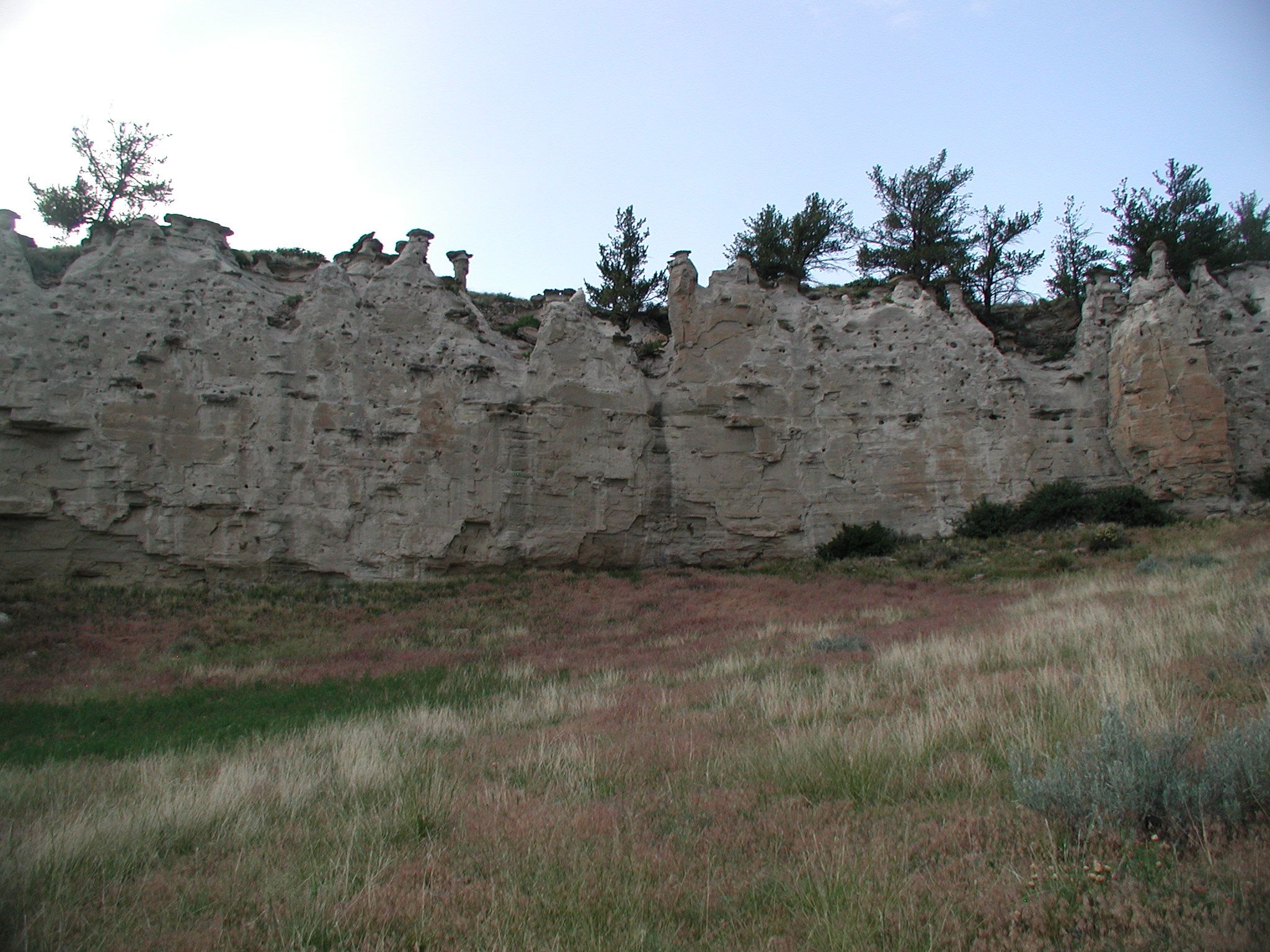
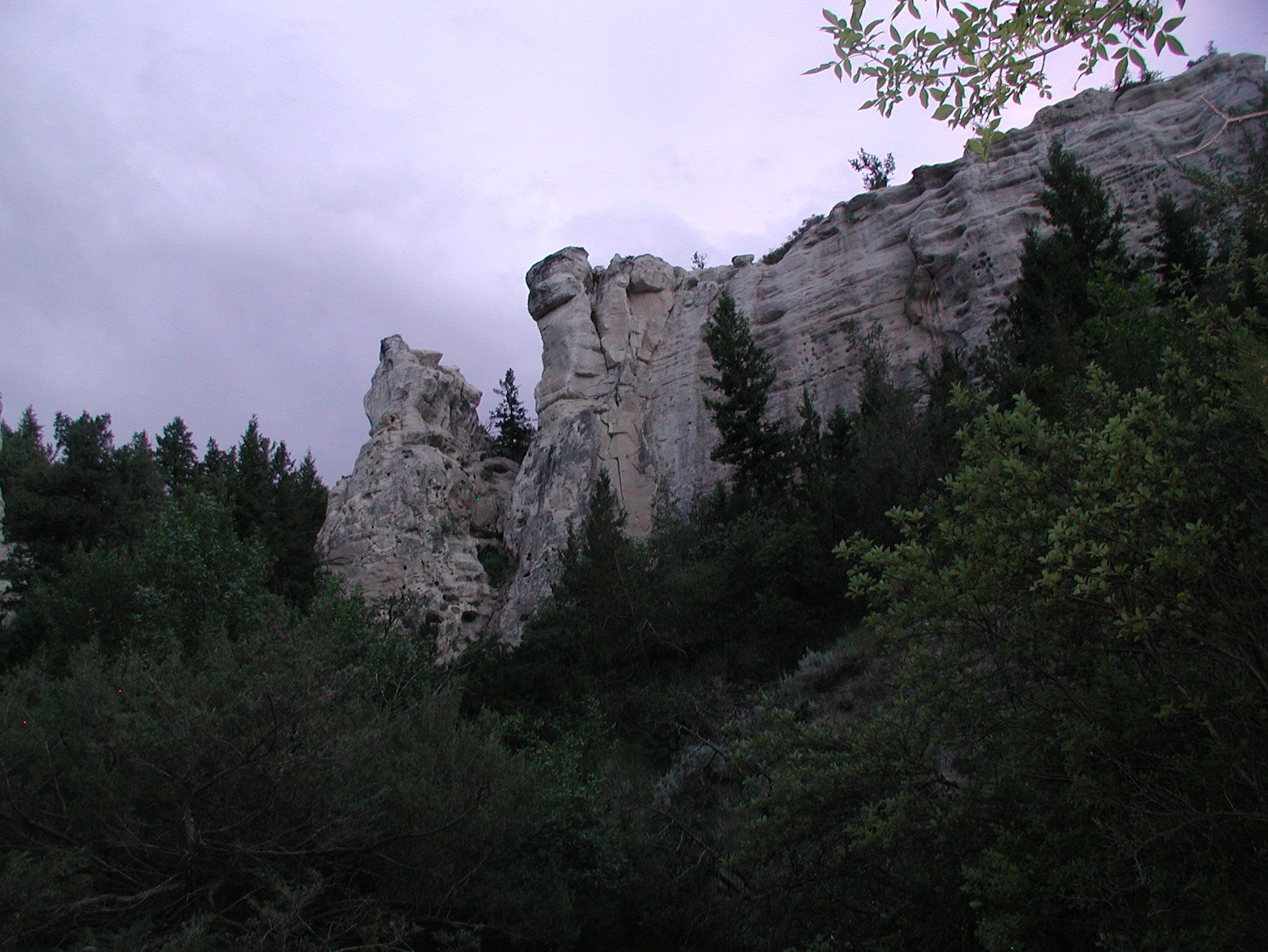

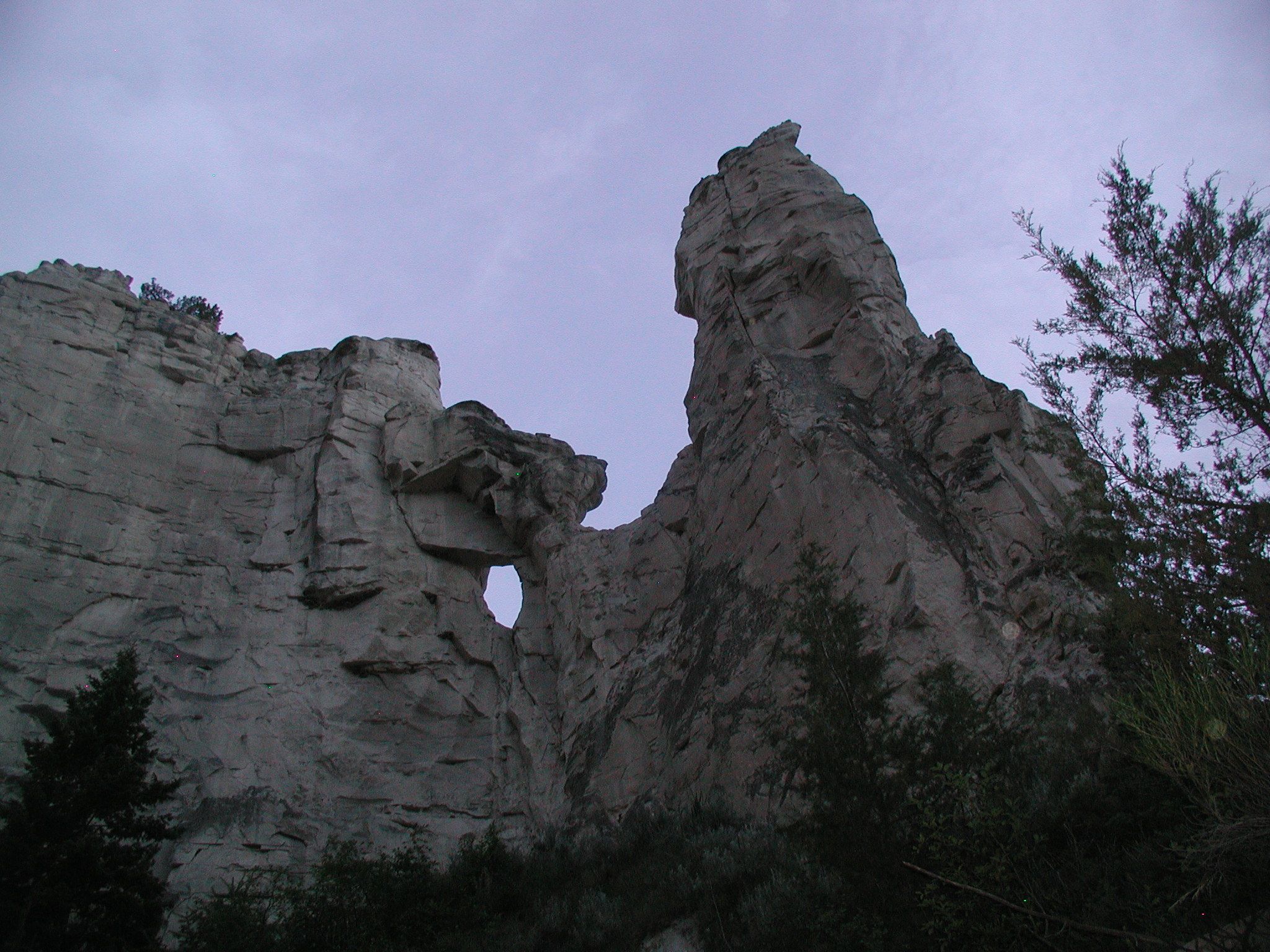
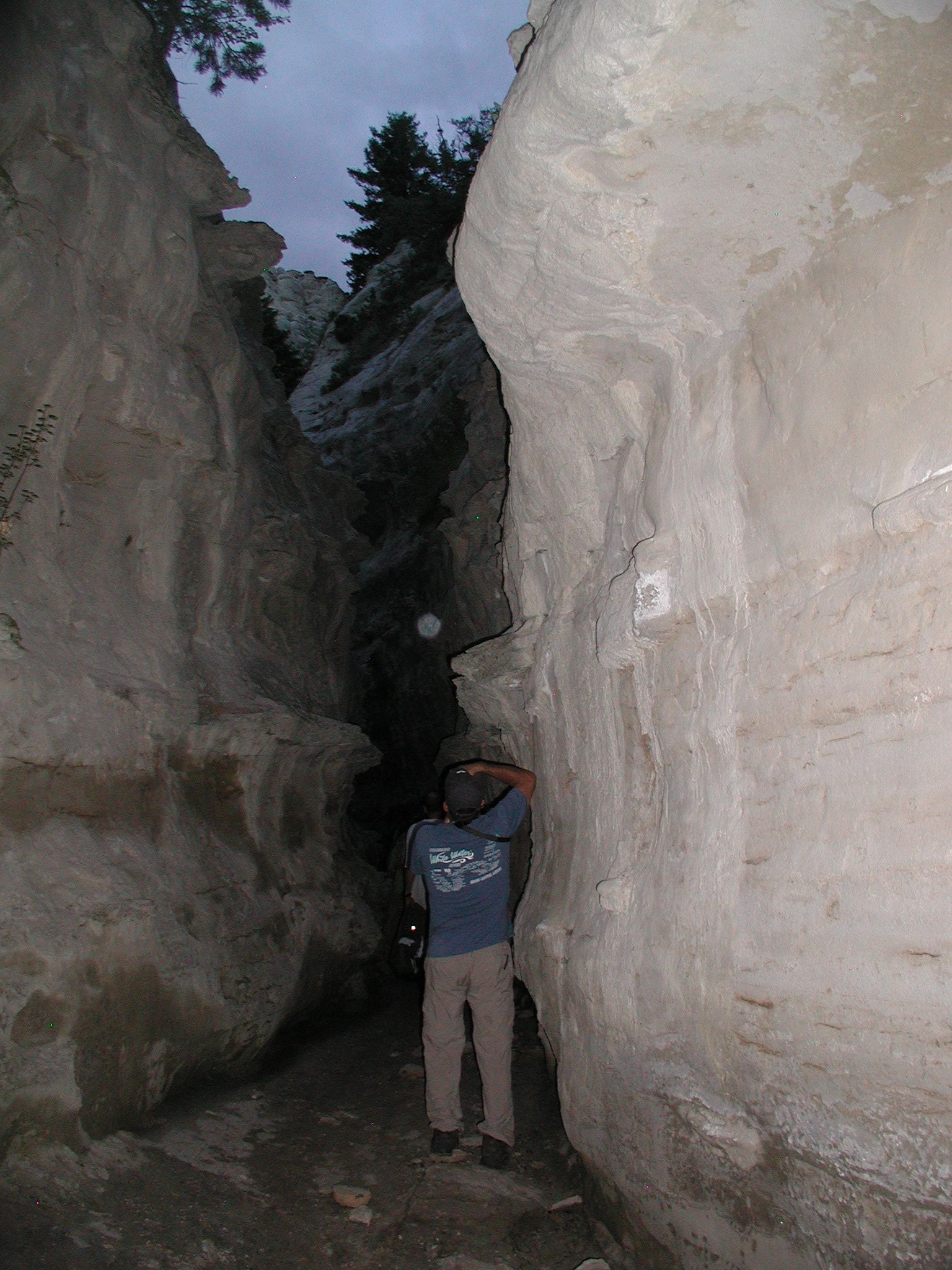
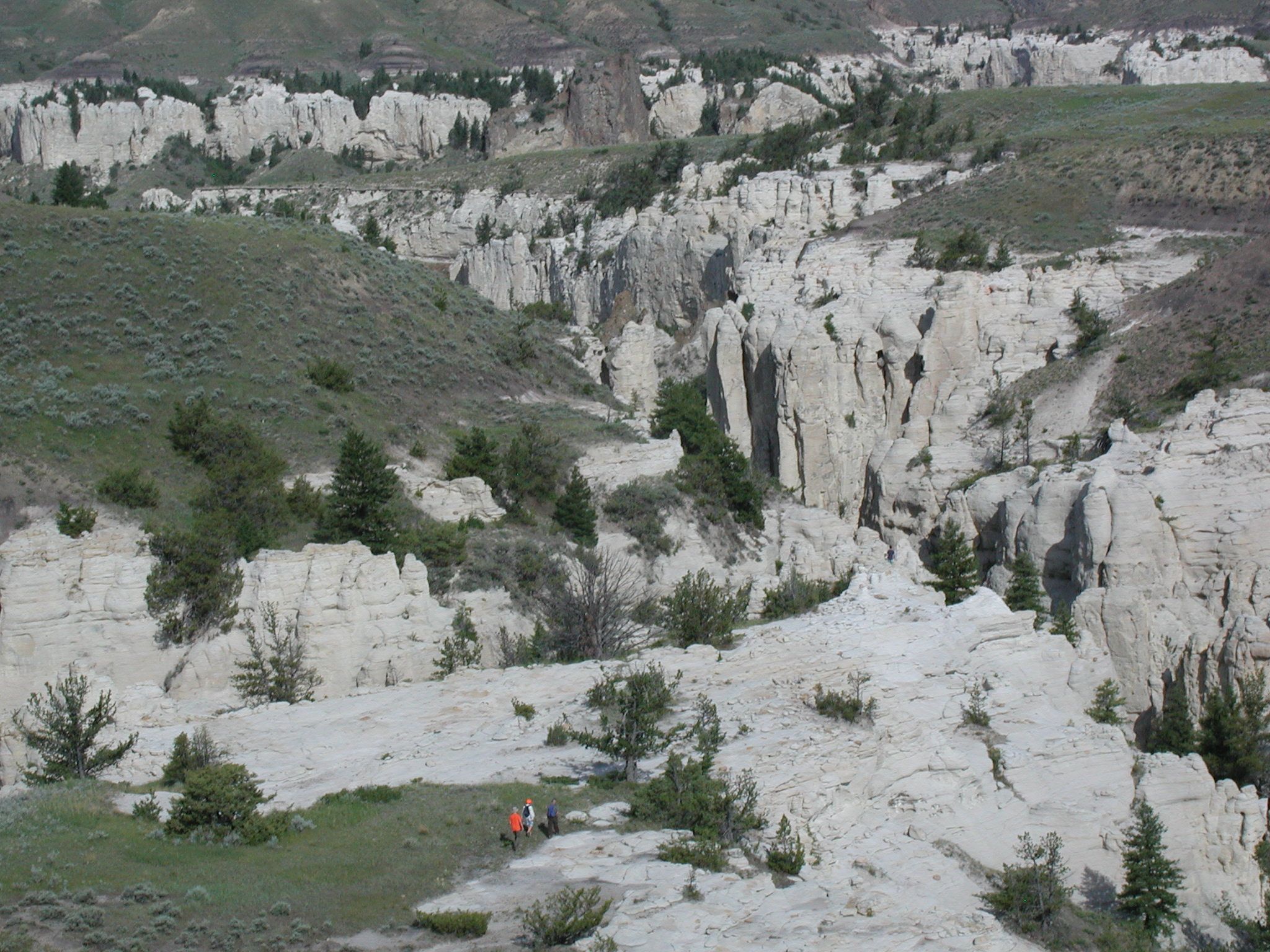
Slot canyon with arches and towers makes a good hike.

Which side of the tent belongs to the camper ready to go?
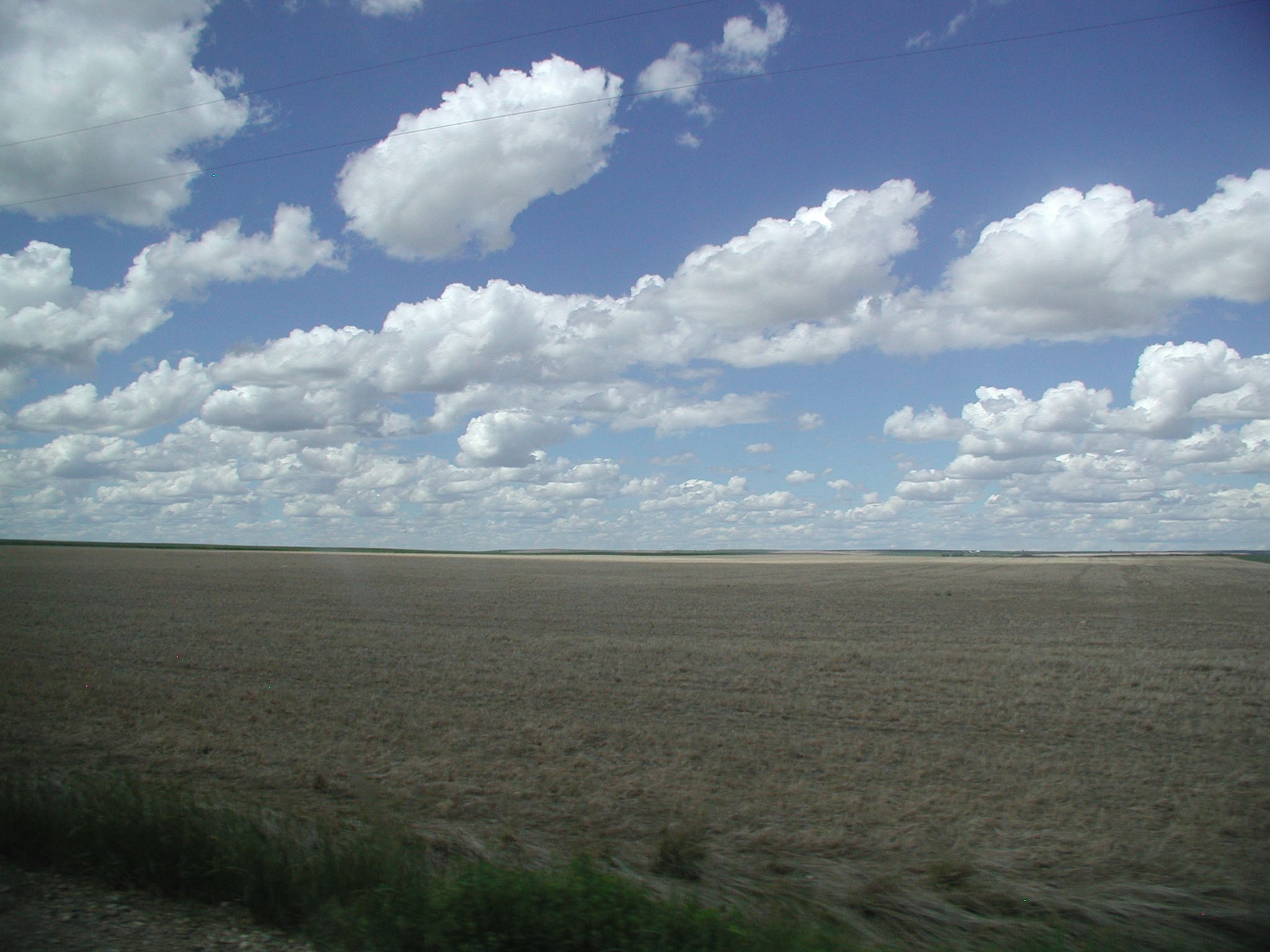
Driving home through Big Sky country.

Counter Balance Food Hang
How to hang food using the counter balance with retrieval cord method.
Pick appropriate tree and branch. In bad bear areas a proper tree may dictate where you camp. As you near timber line there may not be tall enough trees, so you must plan ahead. The limb should be about 20+ feet from the ground. Higher is better as bears are less likely to jump off a limb onto the bags if they know they will take a long fall. The bags should hang about 10′ out from the tree. Where the rope goes over the limb, the diameter of the limb should be about the size of your wrist or smaller. Larger and they can climb out the limb, smaller and they can break or chew through the limb. Some bears can get any food hang too. Check with local authorities about food storage methods. Food hangs work best with wild bears that have some fear of humans.
Camping with groups, we had to hang as much as 200 lbs of food each evening. It can take several hours, and several trees, to do it right for that much food. A bear resistant canister may be a safer and easier choice for some folks.
—–
Hear are some custom food hang bags by Oware. Ultralight silnylon and noseeum net made for BackpackingLight.com, and heavy Cordura ones made for various Outdoor Schools.
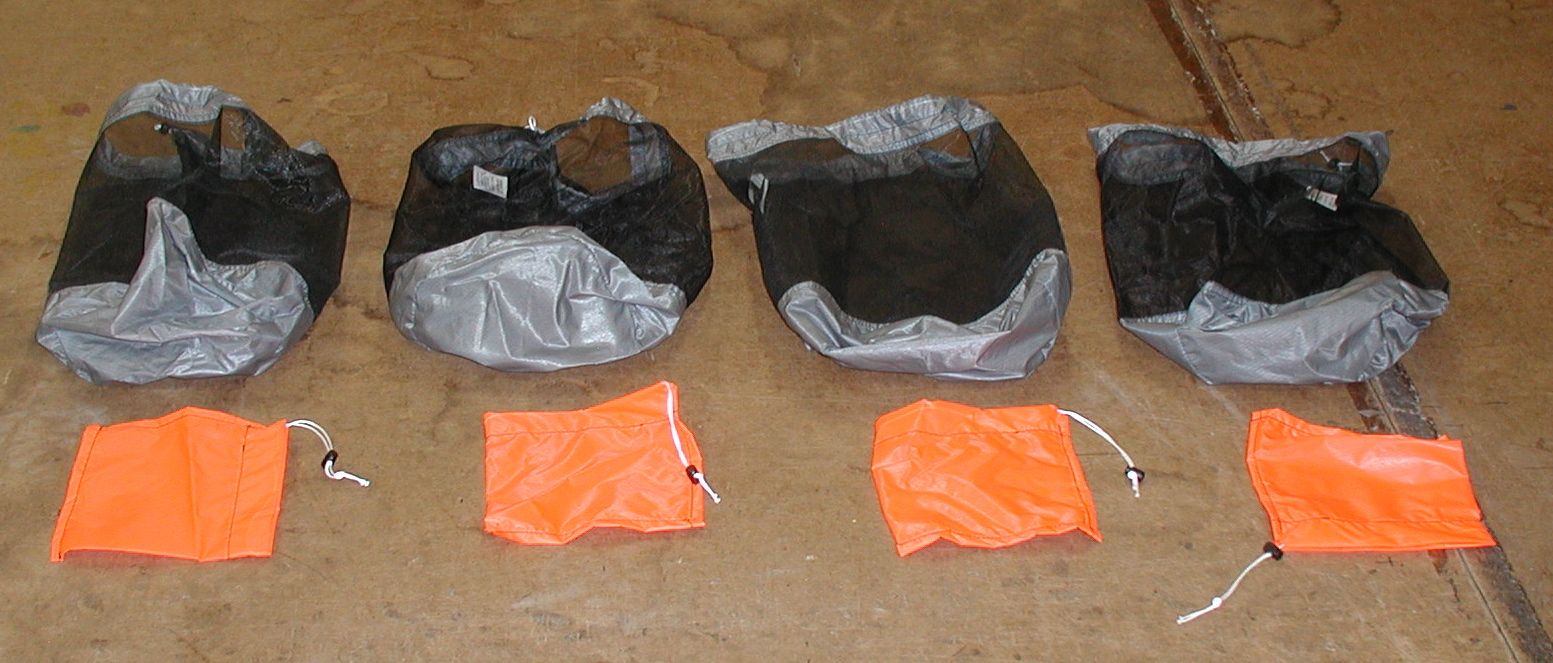
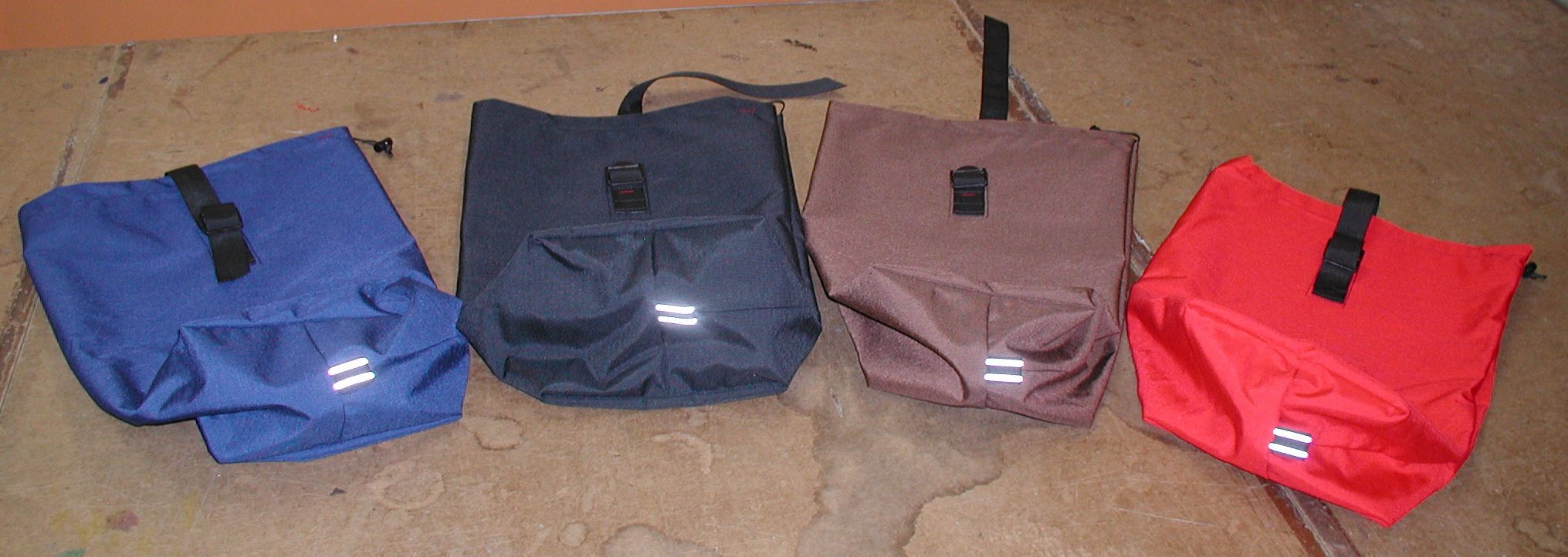
Note the bright orange throw sacks for holding a rock when setting up, and the cord when not in use. Orange is easier to find if you have a bad throw.
The heavy bags use a reflective loop on the bottom (for a retrieval cord) that can be quickly seen at night with a flashlight when checking for suspicious bear like sounds.
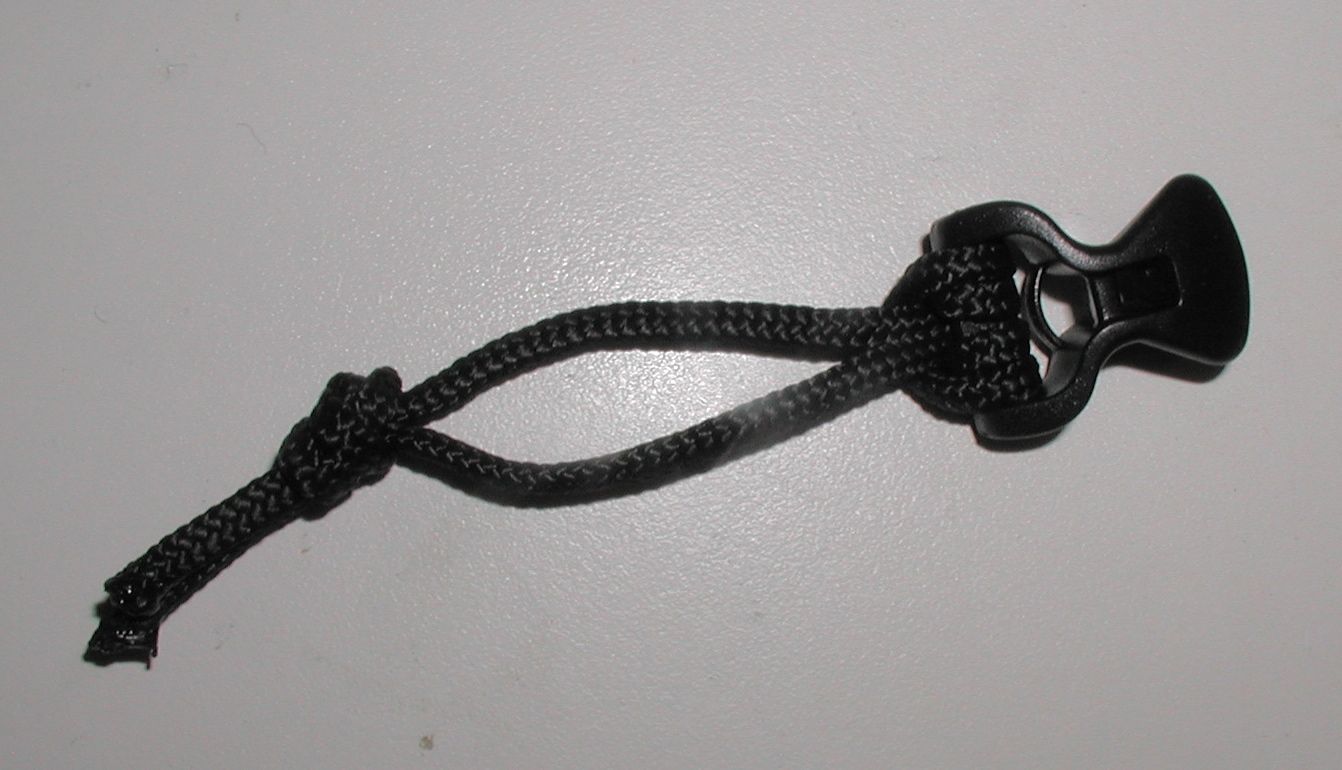
Use a 12″ or longer piece of 2-3 mm cord. Use a 2 wrap prussic knot on the Line Lock. Form a loop in the cord.

Girth hitch (Larks Foot) the loop around the tarp or tent tie out.
Buy linelocs here
http://shop.bivysack.com/product.sc?productId=88&categoryId=10
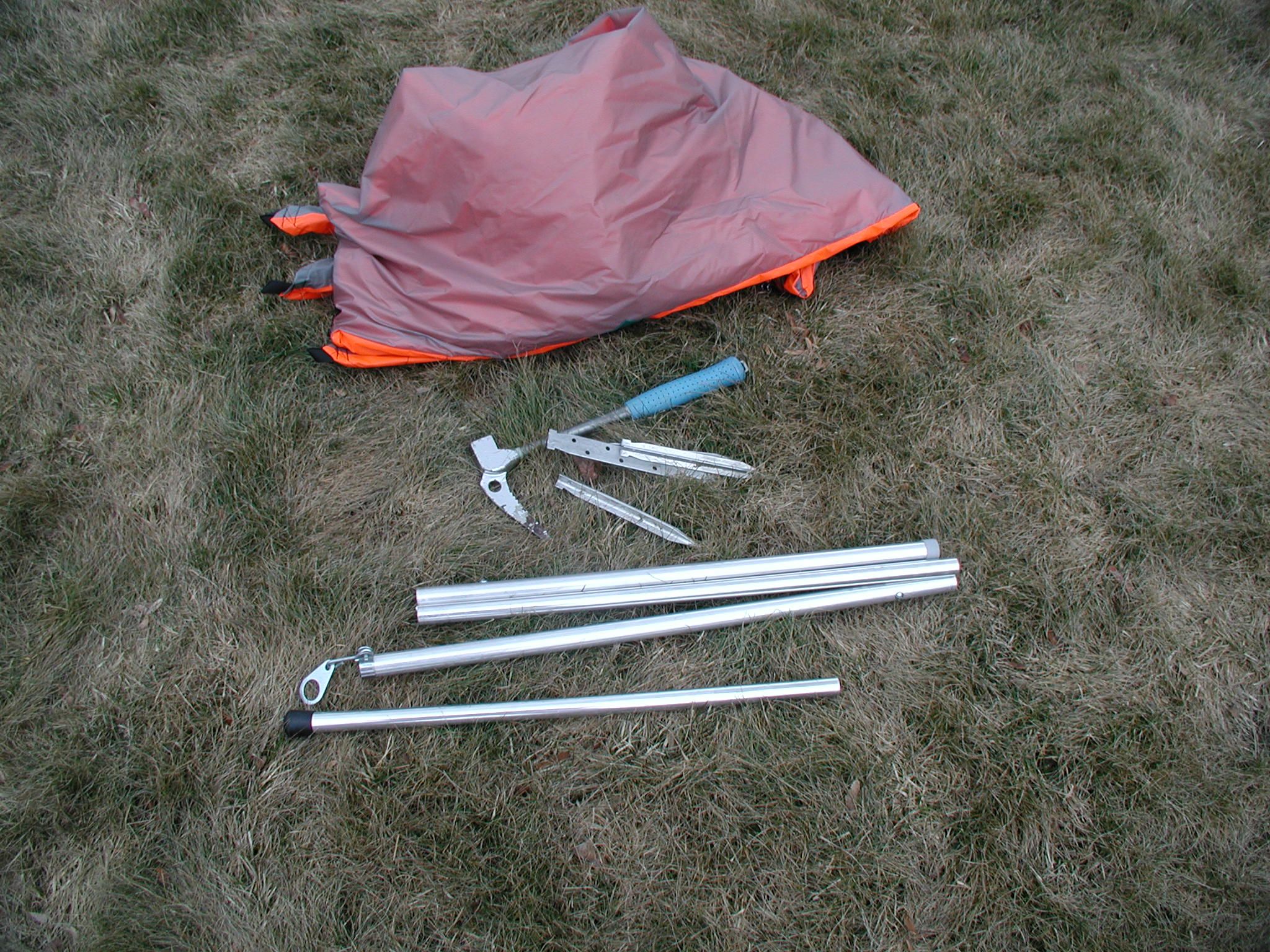
Pyramid, Stakes, Adjustable Pole

Zip and buckle bottom before staking out
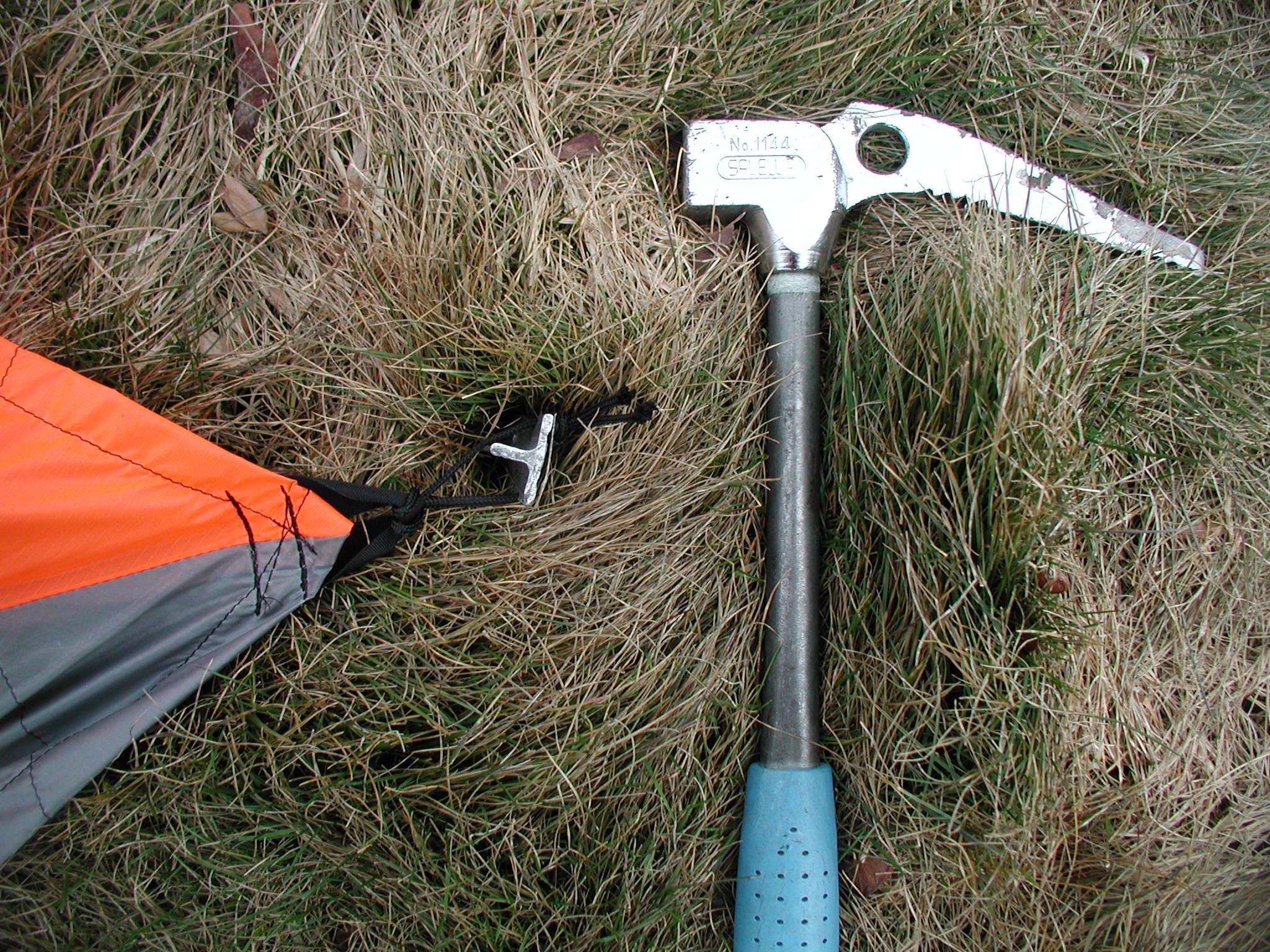
Stake out the four corners. Use a small loop of replaceable cord so wear from rough stake edges will not damage the tent web tie outs.

Stake corners in a perfect square and slightly stretched. This prevents a diamond staking pattern which will cause one corner to be up in the air.

Doors can be tied back and pole inserted after the 4 corners are staked out
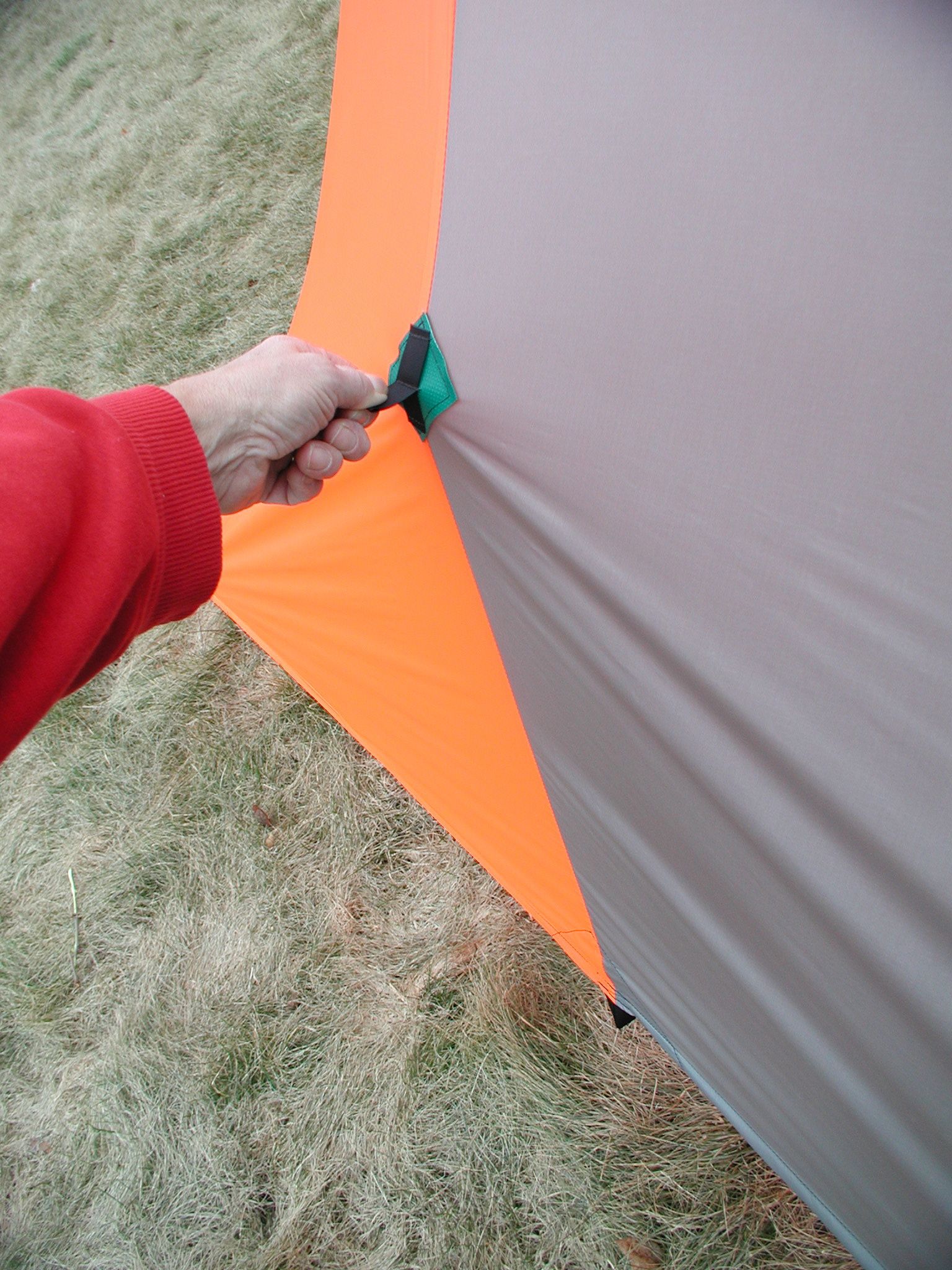
Additional tie outs can be staked around the hem and the upper center tie outs can be used to gain headroom in windy or heavy snow conditions.
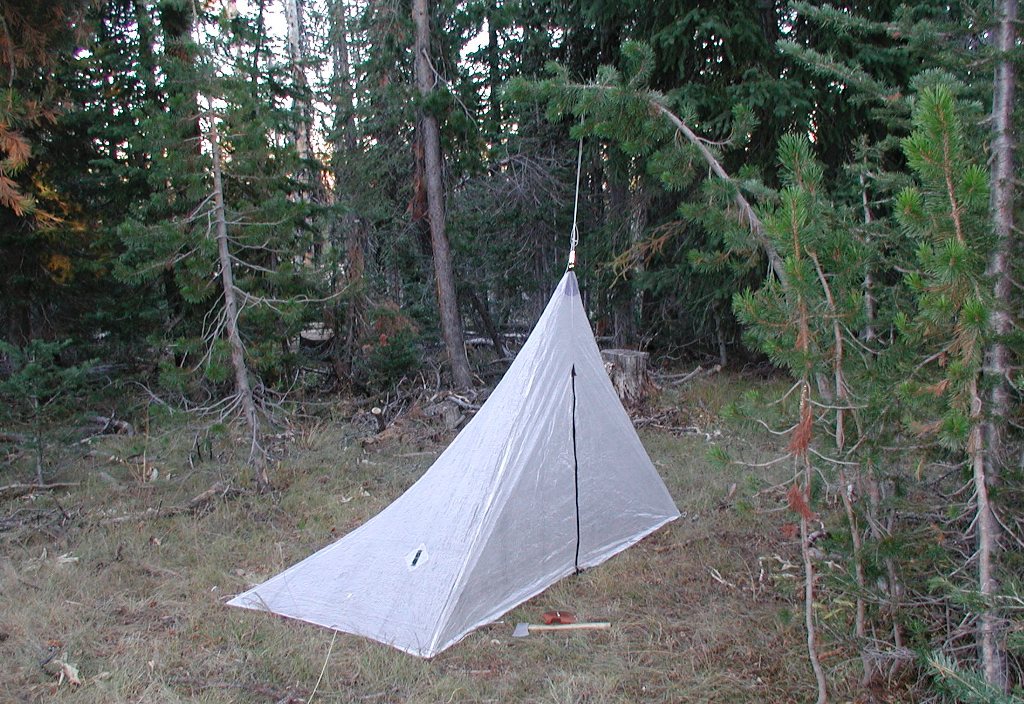
A green branch can be used instead of a tent pole sometimes.
Two wooden poles can be lasted to hold the tarp up from outside.
 Oware
Oware 