
Dop Kits and Tool Bags
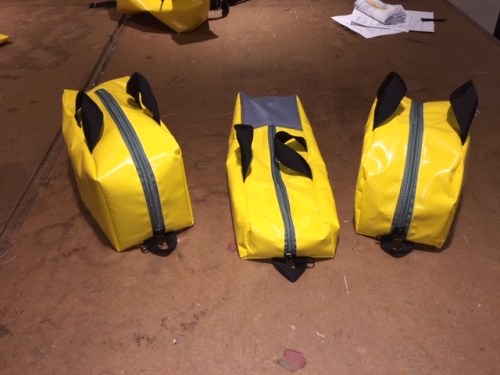
Dop Kits and Tool Bag 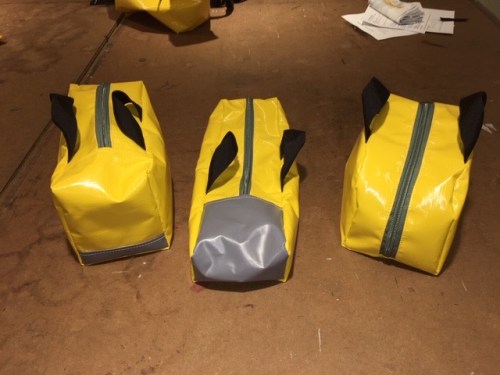
Dop Kits and Tool Bag 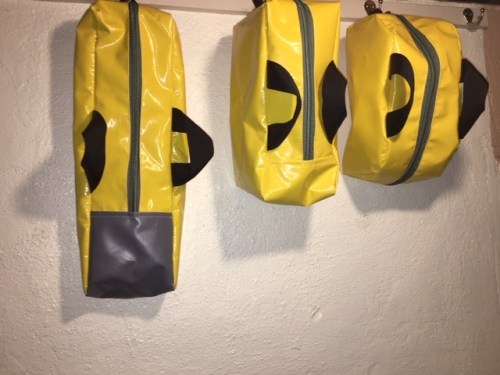
Dop Kits and Tool Bags
Shiny heavy duty reinforced vinyl with huge #10 zippers and wide webbing handles. Great for tools or an extensive shaving/beard kit. Hang them from a coat hook in the bath or from a nail in the garage. Aprox. 350 cubic inches in volume. Get ’em here. Free shipping in USA.
Filed under Oware Backpacking Gear
Snap Hooks for Sale

Filed under Do It Yourself, Fabric
Neat Link on Making a Closed Cell Sleeping Pad into a Folding Version
Filed under Do It Yourself, Tips for the Backcountry
Micro Cord now an option for Tarp and Bivysack Purchases

MICRO CORD 1.2 MM,
Tiny, but with a firm finish that holds knots well and doesn’t abrade easily.
Super light you can carry less than an ounce and have lots for tarp set ups, compass lanyards, emergency shoe laces. Fits in most cord locks, even the smallest.
Misc. colors, our choice
or Black
Filed under alphamid, backpacking tarps, bivysack, cat tarp, flattarp, NetTarp, Oware Backpacking Gear, oware tarps, pyramid tarp
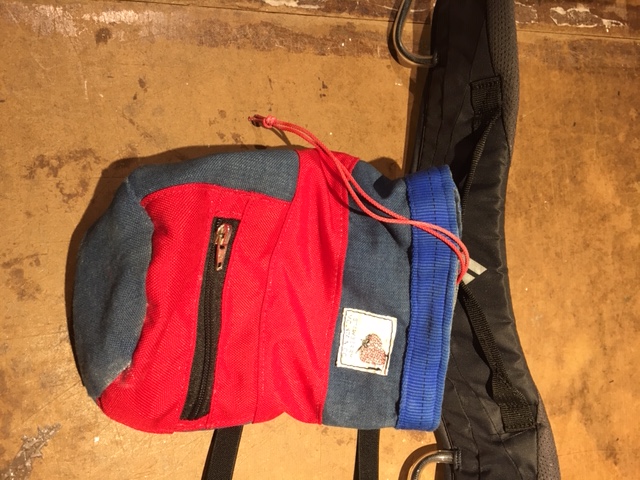
Rebuilt vintage chalk bag and added loop to climbing harness
Took my worn Strawberry Mountain Chalkbag and replaced the center bellows with new Cordura, added a zip pocket for rap rings, mini knife and such, replaced the carabiner loop with a buckle and web.
Added a web gear loop on the back of my harness that fits the web on the chalk bag to eliminate a carabiner.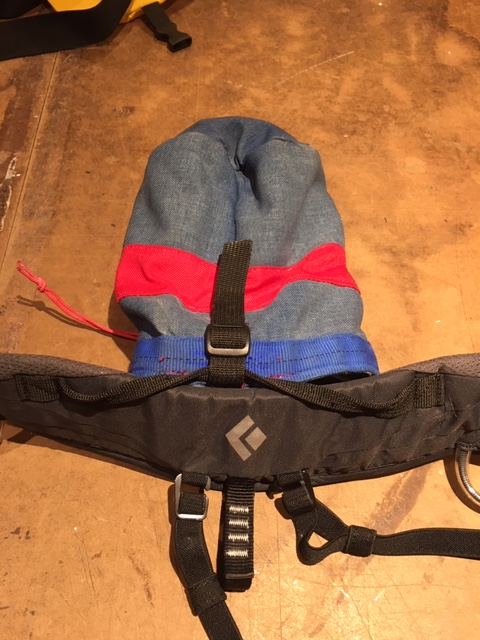
Filed under Oware Backpacking Gear
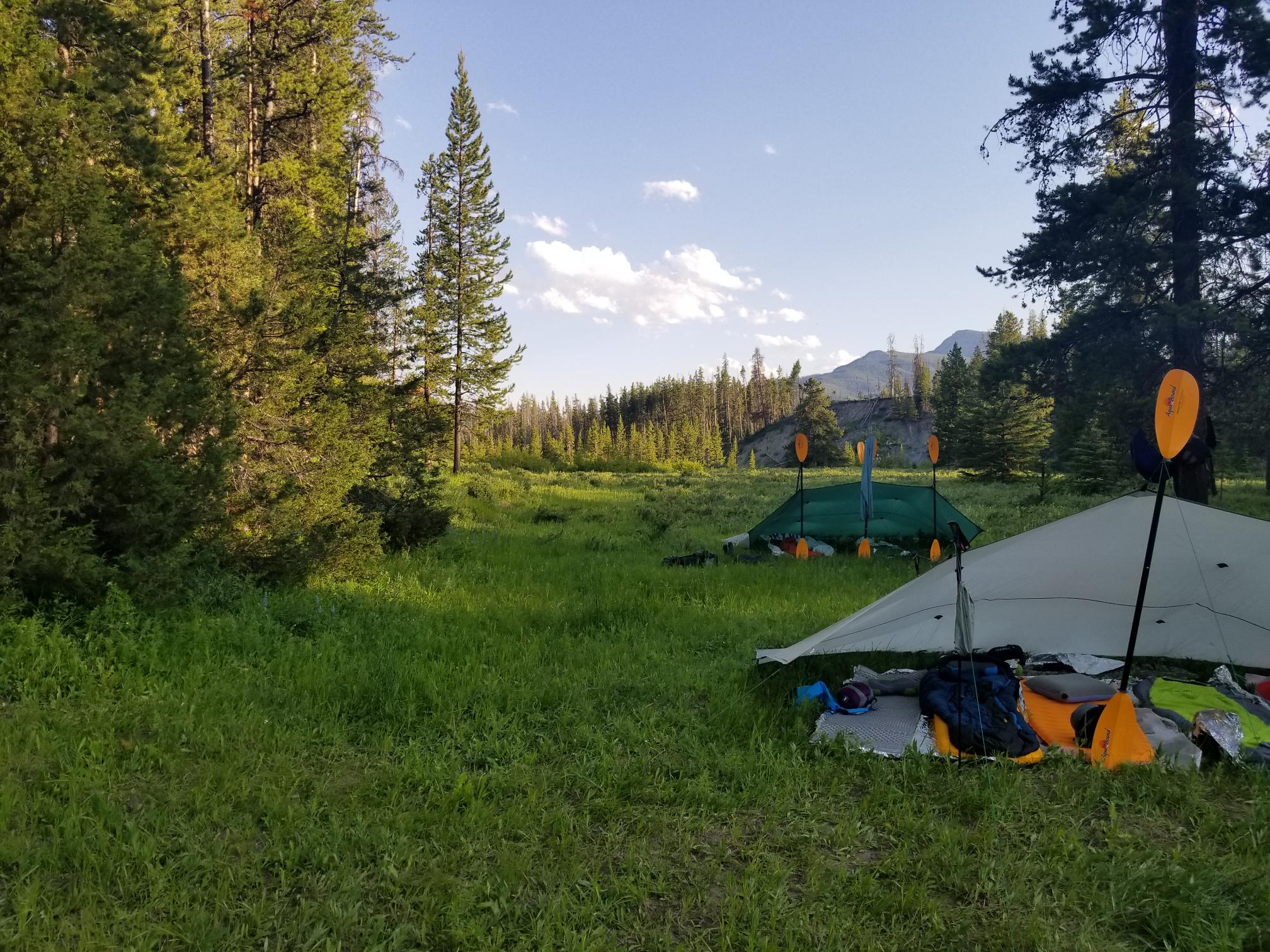
Group Tarps on a BSA High Adventure
Great Example of using paddles for tarp poles.
Photos curtesy of Stephen Miller.

Filed under backpacking tarps, Customer Quotes and Photos, flattarp, oware tarps, Scouts
Back in the day Trad Climbing Humor
Written in response to a question on the MountainProject Forum.
“does anybody else use lockers to rack your cams so you don’t drop them while climbing?? when you rack up for the pitch, just remember to check all of them are fully locked. when black totems are like $115 a pop, i want to make sure they stay safely on my harness.
for anybody else that does this, do you prefer screw locks or double/triple action lockers?? thanks”
Lap Link
History of the lap link in rock climbing.
Chouinard’s invention of the Rugby shirt birthed an explosion of off width climbing. Those developing such, soon ran into problems racking gear. In the tight confines of the cracks and chimneys, the long Perlon on the Nuts would dangle down below the Swami belt and tangle with the spring on the Stitch Plate, coming loose. This presented a safety concern not only for the leader, but also for the helmet-less followers of St Yvon’s aesthetic philosophy. Socks worn inside beenies and chalk bags under bandana’s were no match for a number 10 Hex descending from on high.
Lap links came on the scene. One could smash them closed with a wall or alpine hammer, fixing the gear to the gear sling. They were pried apart with a bit from the bolt kit or a knifeblade piton.
Innovations followed.
Bill Forest came out with Tetons. Slung with webbing instead of thick static cord, they didn’t require such wide openings to un-rack.
Yvon introduced the Super Long Dong, then the Crag Hammer for extra prying leverage.
Greg Lowe swaged a little keeper cable on the link for use as a belay plate. (citation needed)
Then the lap links limitations started to be apparent. Some of the first instances of anxiety over micro fractures in climbing gear had the campfire discussions and mental health counseling sessions hopping. REI dropped them from their catalog after rumors they were culturally appropriated from Northern Scandinavians. The last nail in the seam for the lap link came when Ace Hardware released a warning regarding galvanic corrosion when racking Copperheads and Pecks.
Climbing in some long forgotton Rocky Mtn cirque or on some friable desert basalt column, you may still come across one of these bits of history.
Attached to an old lead sleeve lag bolt or hanging from faded SuperTape or quarter inch Goldline, left as a rappel ring by some long gone climber backing off something too scary to finish. If so, pause for a moment ——-and replace that sucker with some new gear rated for climbing.

Filed under Oware Backpacking Gear
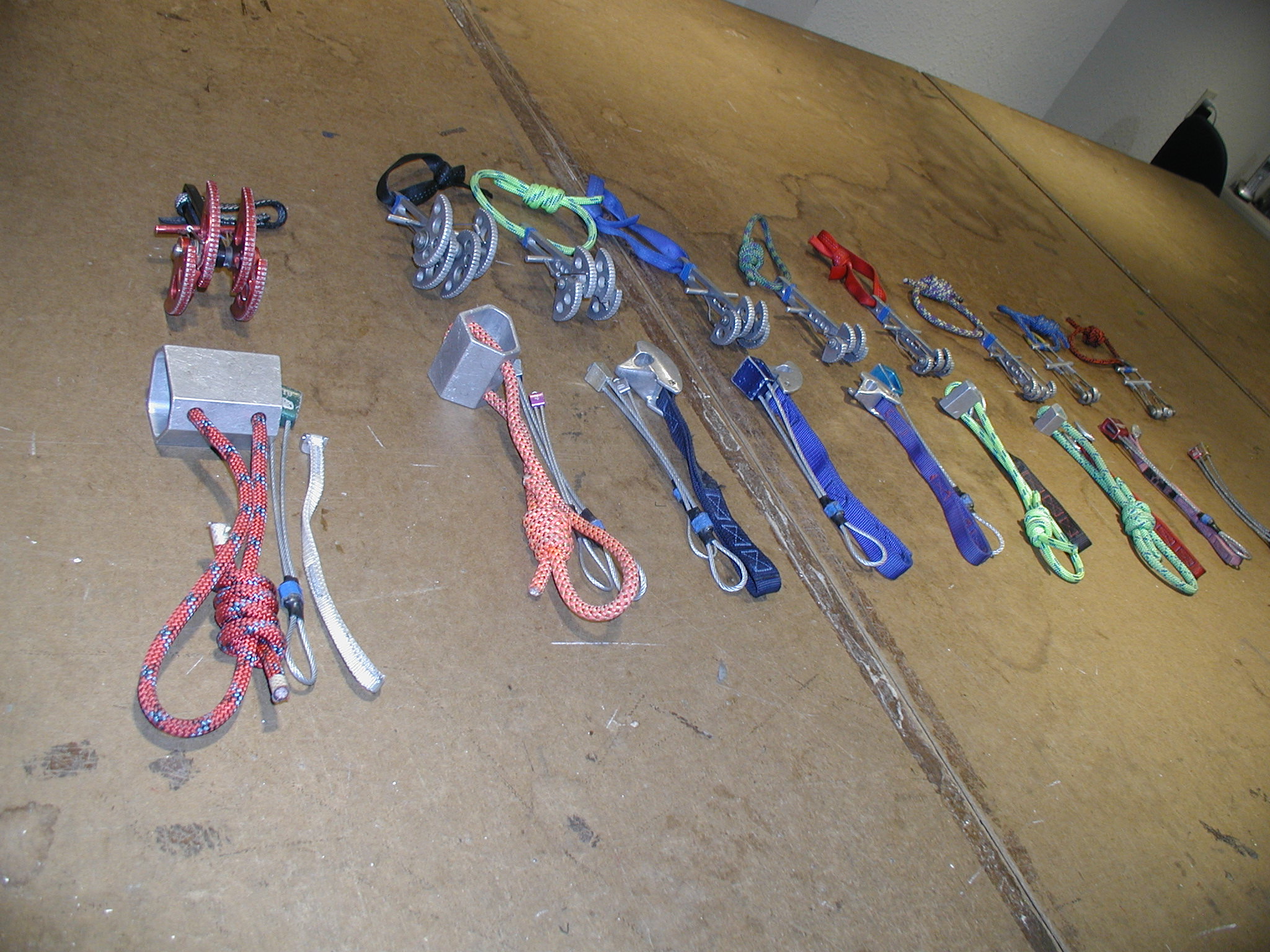
Climbing Protection, Weights of Passive vs Active
Old School cams (friends) matched with the same weight of passive pro. At least 1 of the passive nuts are similar in size to the cam opposite. In other words, you can double the size of your rack (if not the ease and speed of placement) with passive gear, especially tri-cams.
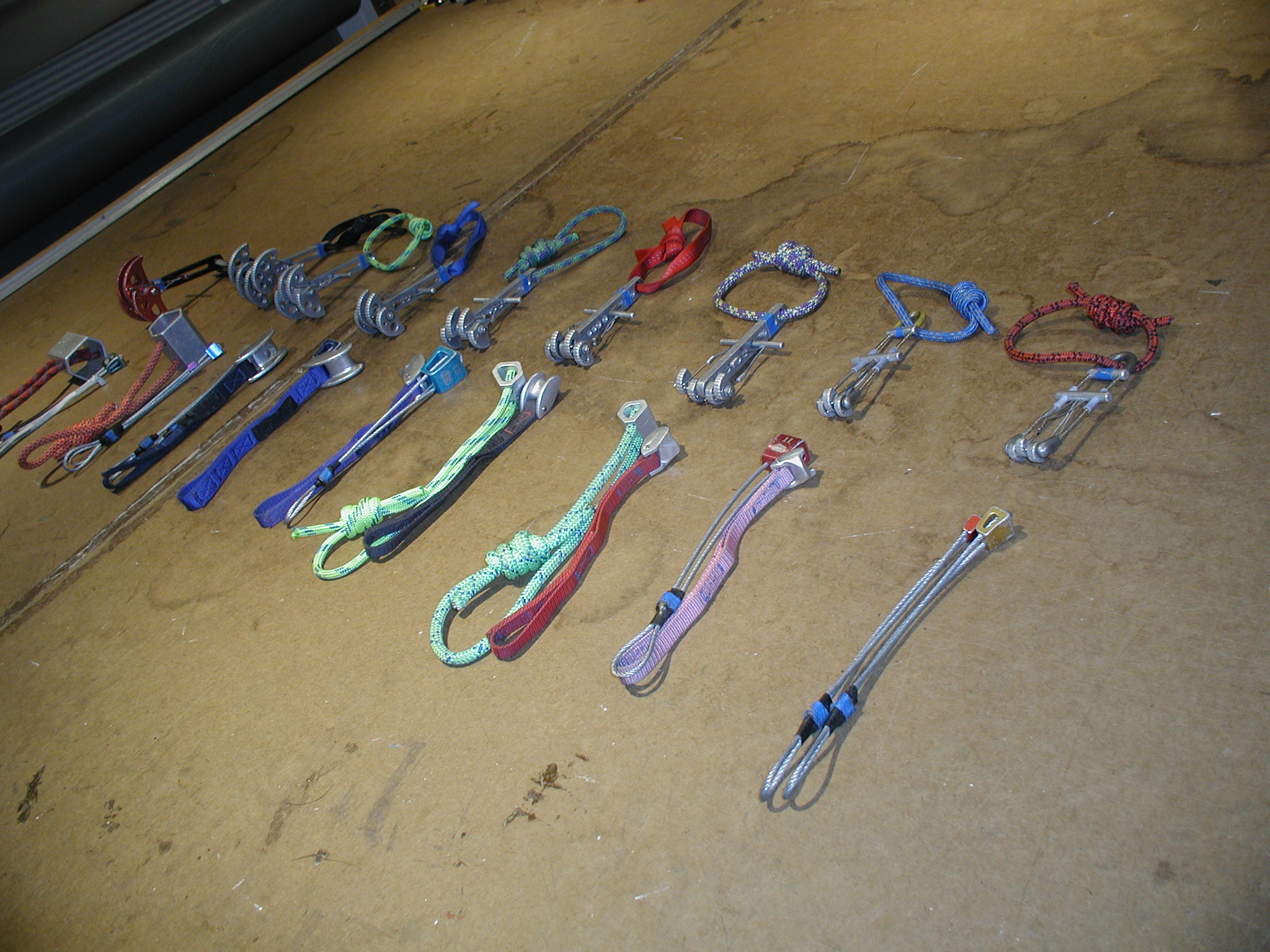
Cams vs nuts by weight
OLYMPUS DIGITAL CAMERA

 Oware
Oware 