
Found these climbs with Robert A. on an early season Outward Bound Course. Fun short top rope climbs for Dinkin around.
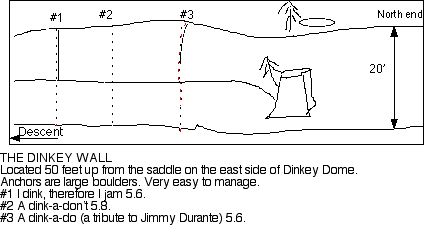
Found these climbs with Robert A. on an early season Outward Bound Course. Fun short top rope climbs for Dinkin around.
Filed under Good Links, Tips for the Backcountry
I just received a large shipment of closed cell foam pads.
One set is 3/16″ thick and a density of 29. This denser version makes a thin pad tear resistant. Sizes include full length versions for one (20×76″) or two (40×76″) as
well as a torso size (19×40″). The double wide version is often used by hammock campers
for insulation that wraps around the sides where the hammock fabric pushes the sleeping bag insulation flat. This thin foam, while not warm enough for a sleeping pad by itself in cold conditions, is nice to use under an inflatable pad to protect it from punctures and to add some warmth. The torso length pad is good in a day pack for emergencies, as a waterproof sit pad, to add stiffness to a frameless pack and can be cut up for splints or added as cushioning in side the shoes.


The second set of foam is 1/2″ thick with a density of 24. A touch warmer for the
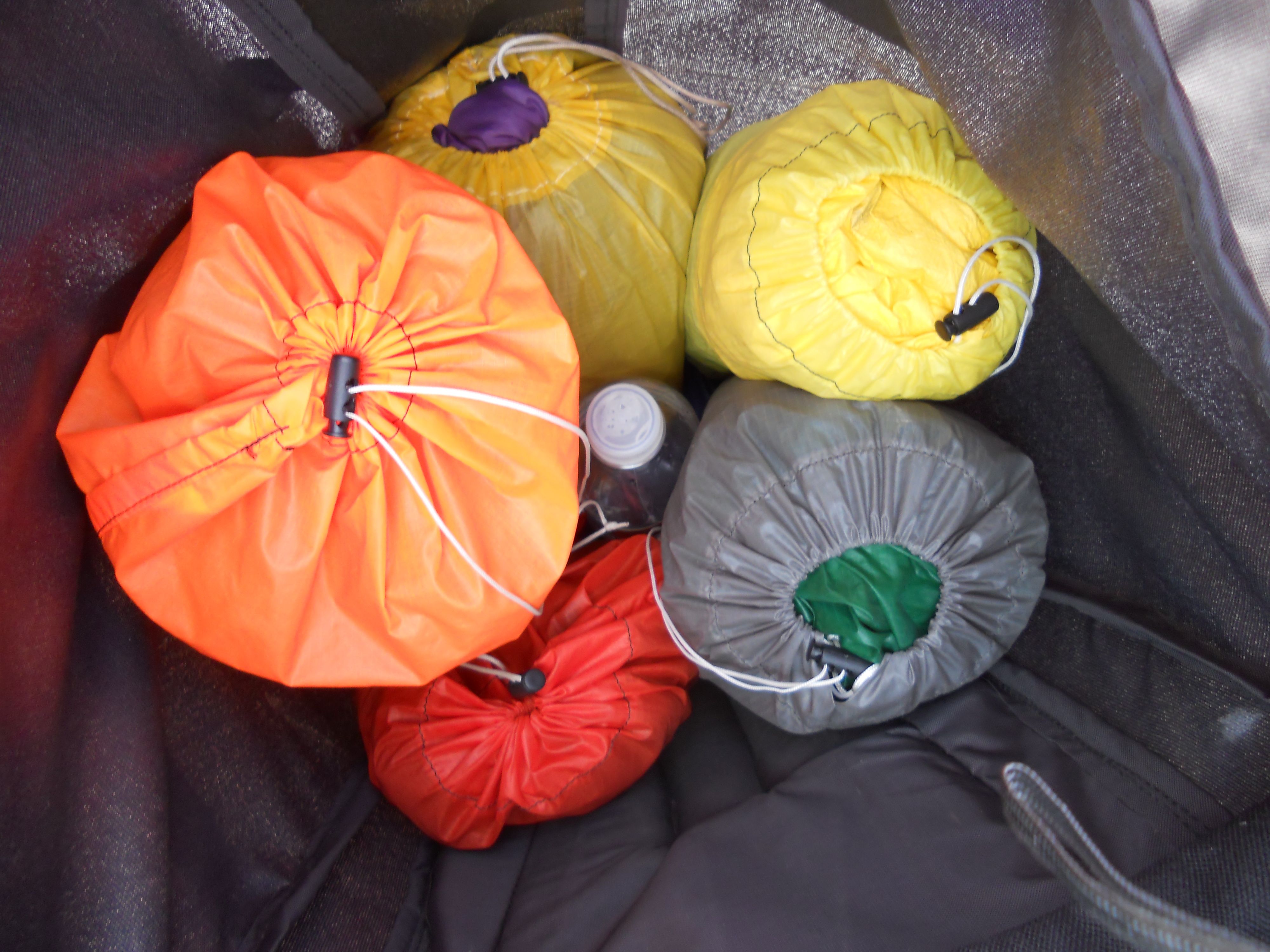
weight, this foam is Waterproof to a Hydrostatic Head of 3500 mm. R value of 2.
Some have found this to be adequate for winter camping. Others double it up for
bitter cold. Sizes 40×60″, 20×60″ and 20×40″.
Filed under Oware Backpacking Gear, Tips for the Backcountry
A sump screen can be a lightweight help in reducing your environmental impact
on the wild places you love. By straining the food particles from your dishwater,
you dissuade animals from digging up the soil where your dishwater is drained,
and help keep them wild and unaccustomed to humans. This is especially important
on popular trails and camping areas. Help keep the chipmunks, marmots, jays, raccoons, skunks, coyotes, deer, and bear safe and out of other users gear.
I like a square panel of noseeum netting leftover from tents and bivysack manufacture.
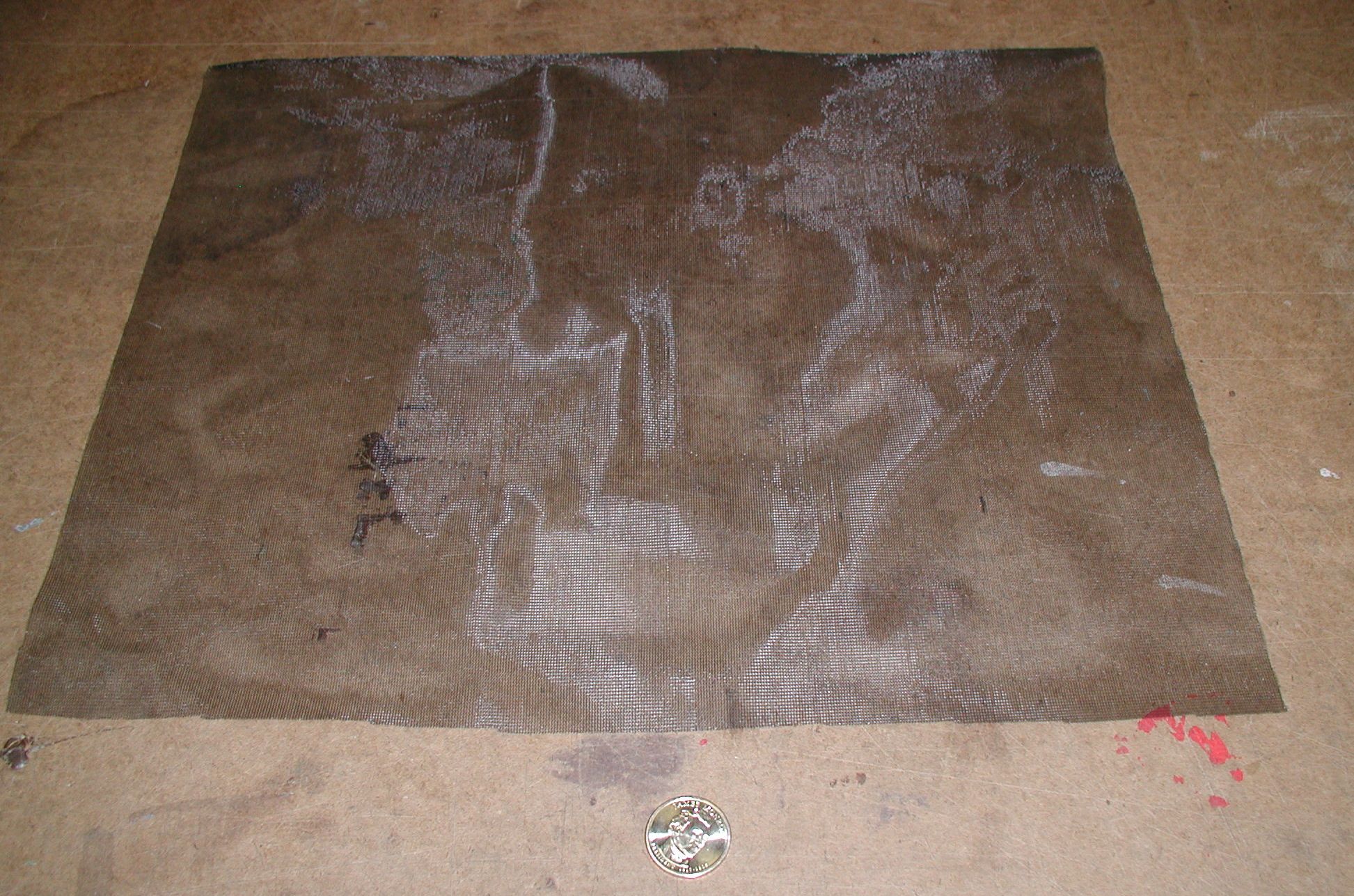
Sump screen of noseeum netting
I will send a piece with each order from Oware if you will note you want one in the comment
section of the order.
Questions?
509-685-0125
do@owareusa.com
Filed under Do It Yourself, Fabric, Tips for the Backcountry
Use stuffsacks to organize and protect your gear.
1. Line a large stuffsack with sleeping pad and plastic trash bag.
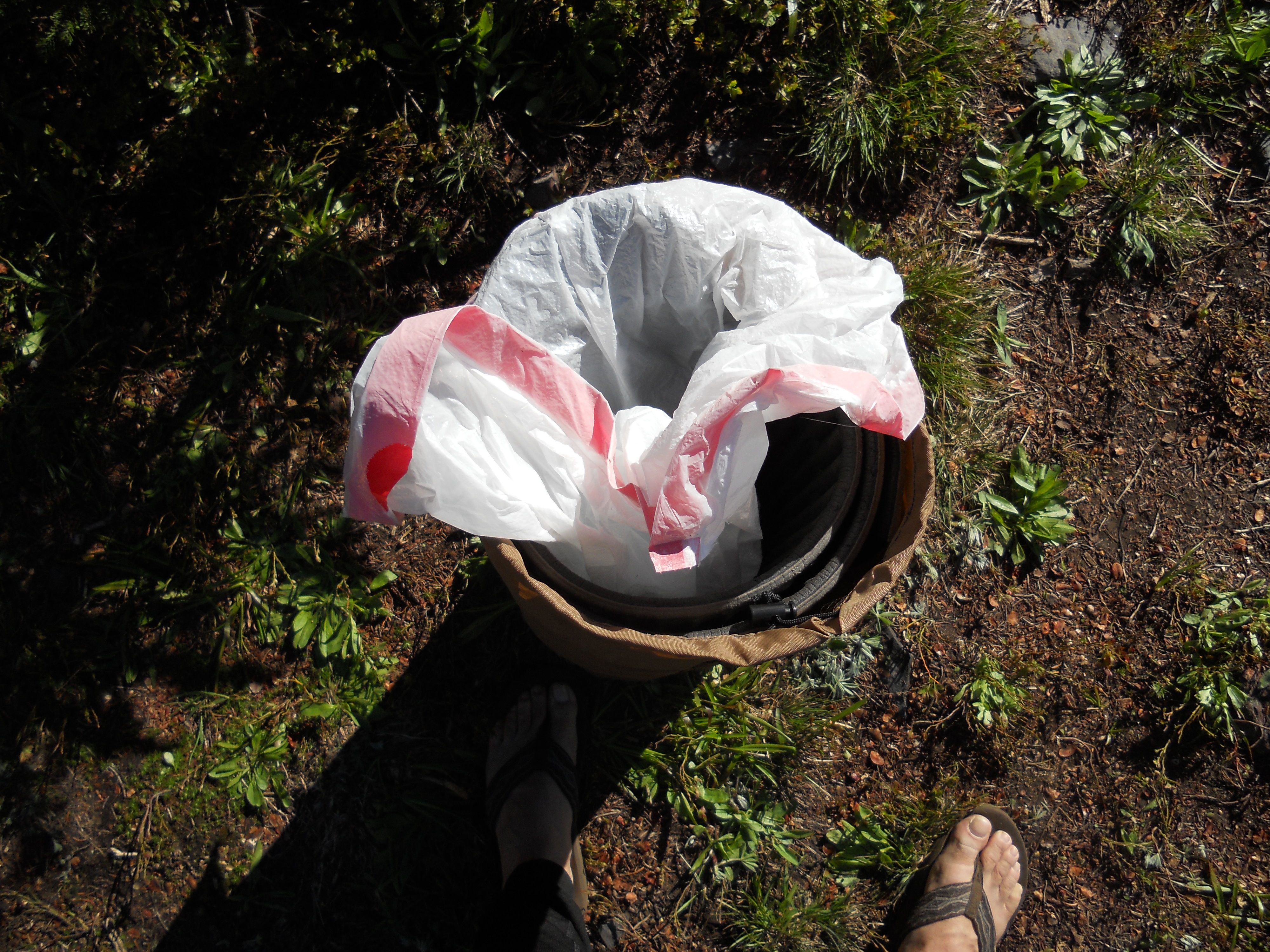
2. Stuff sleeping bag inside plastic trash bag.
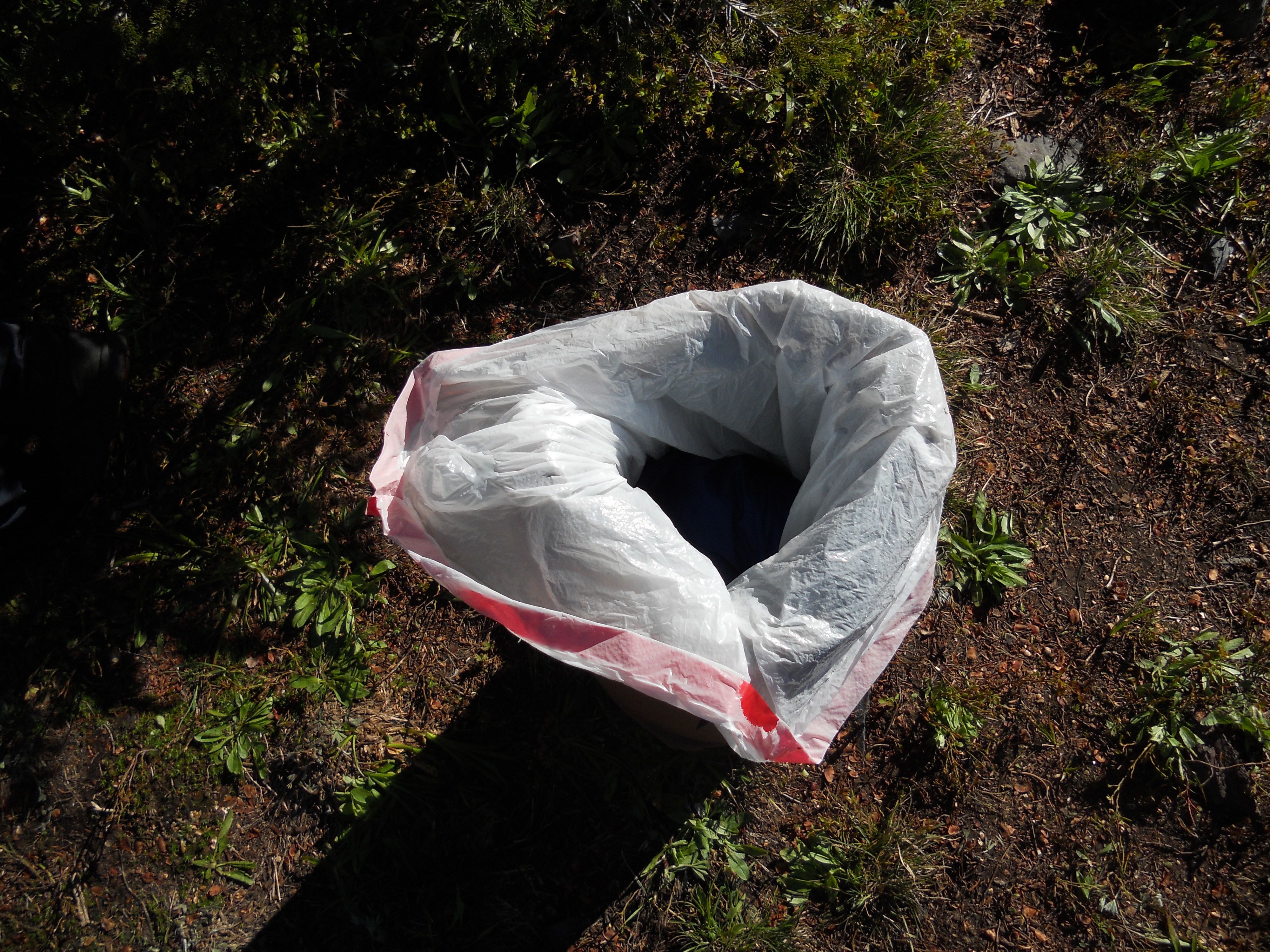
3. Add night time gear, extra clothes etc.
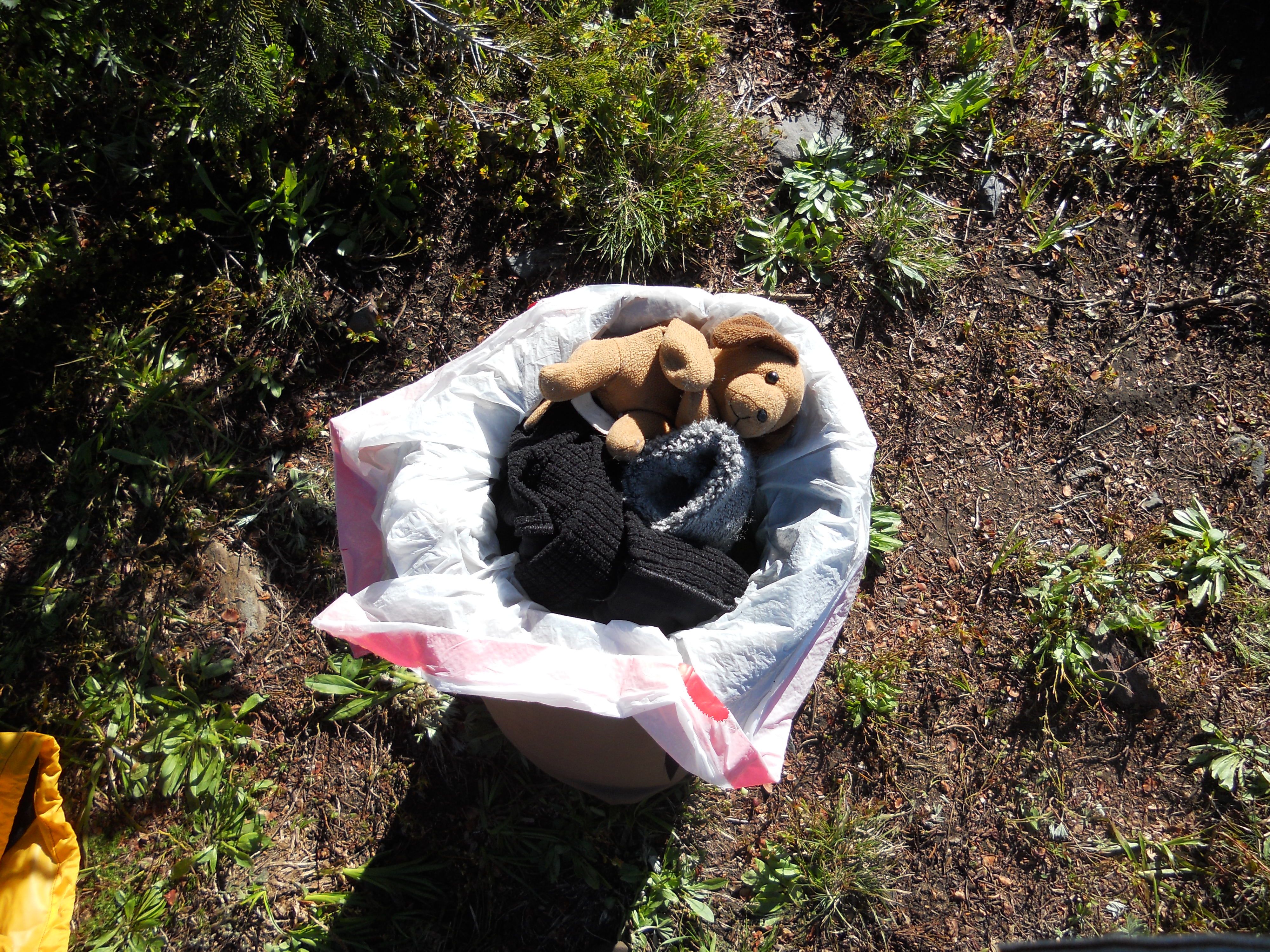
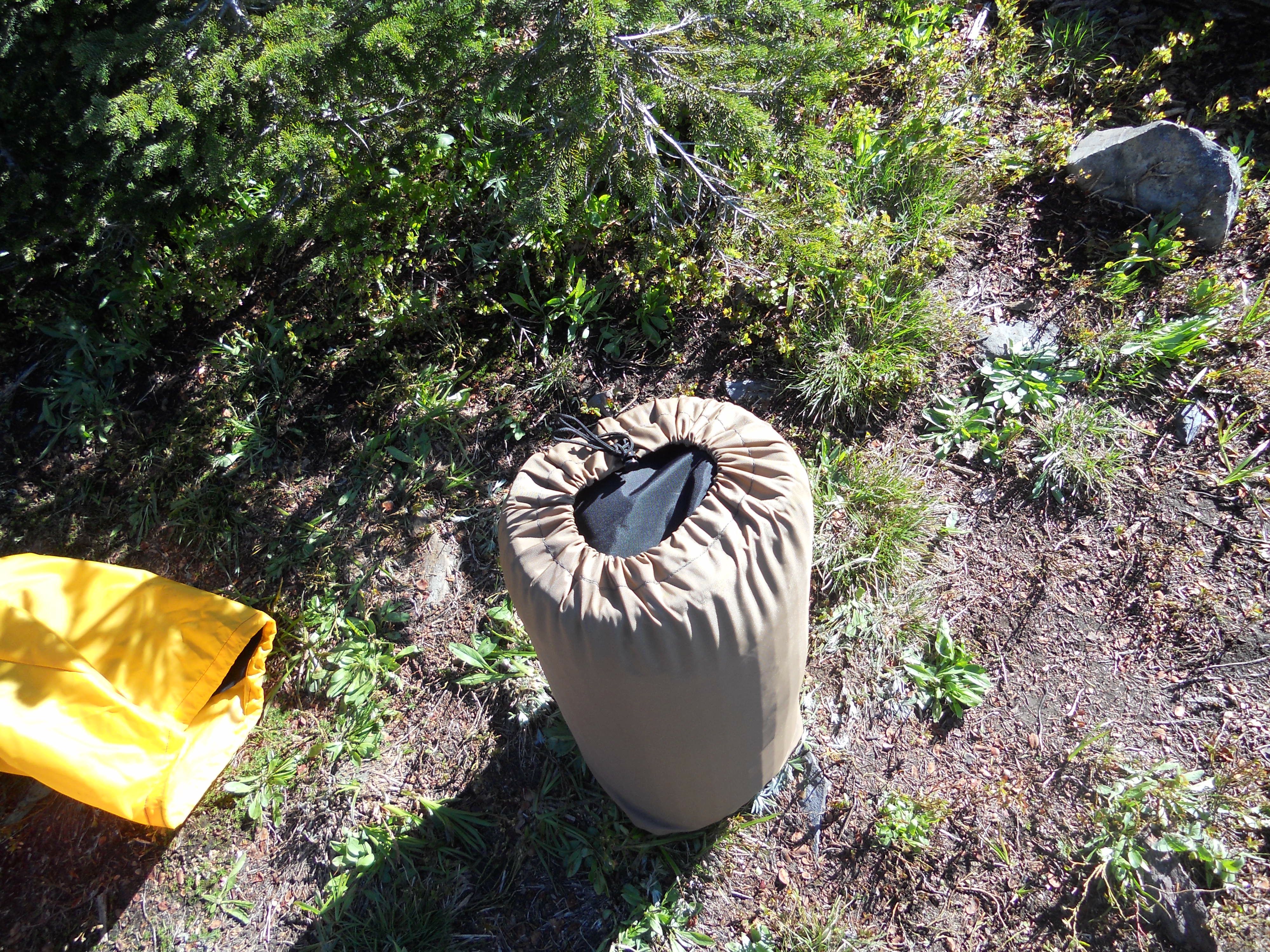
4. Twist top of trash bag closed and drawcord closed the stuffsack. This Tan
stuffsack is made of heavy duty 400 denier pack cloth and is to be strapped to the outside bottom of a frame pack.
5. This blue lightweight 30 denier stuffsack is to be stuffed into the bottom of an internal frame pack.
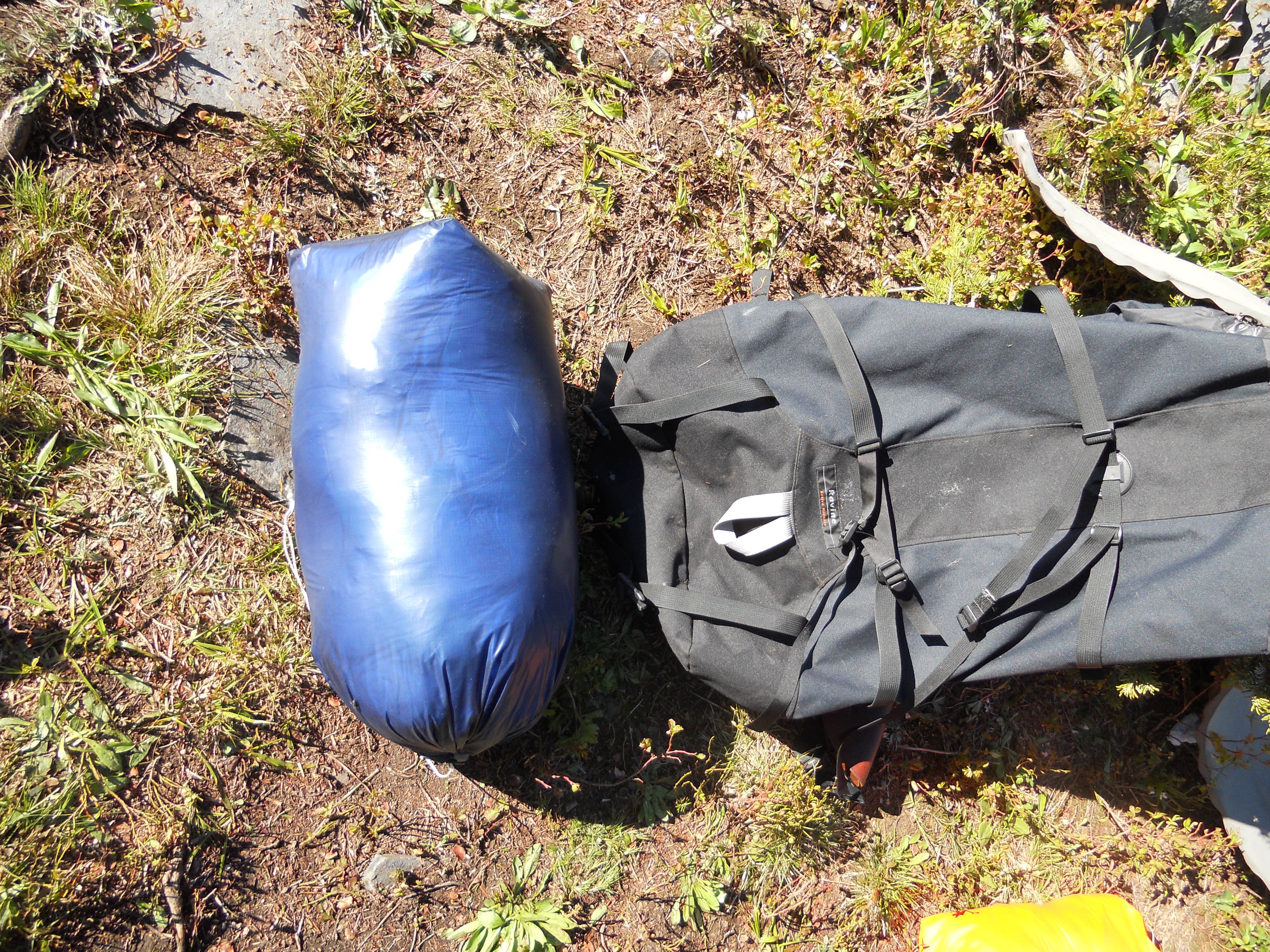
6. Insert the stuffsack vertically into the pack.
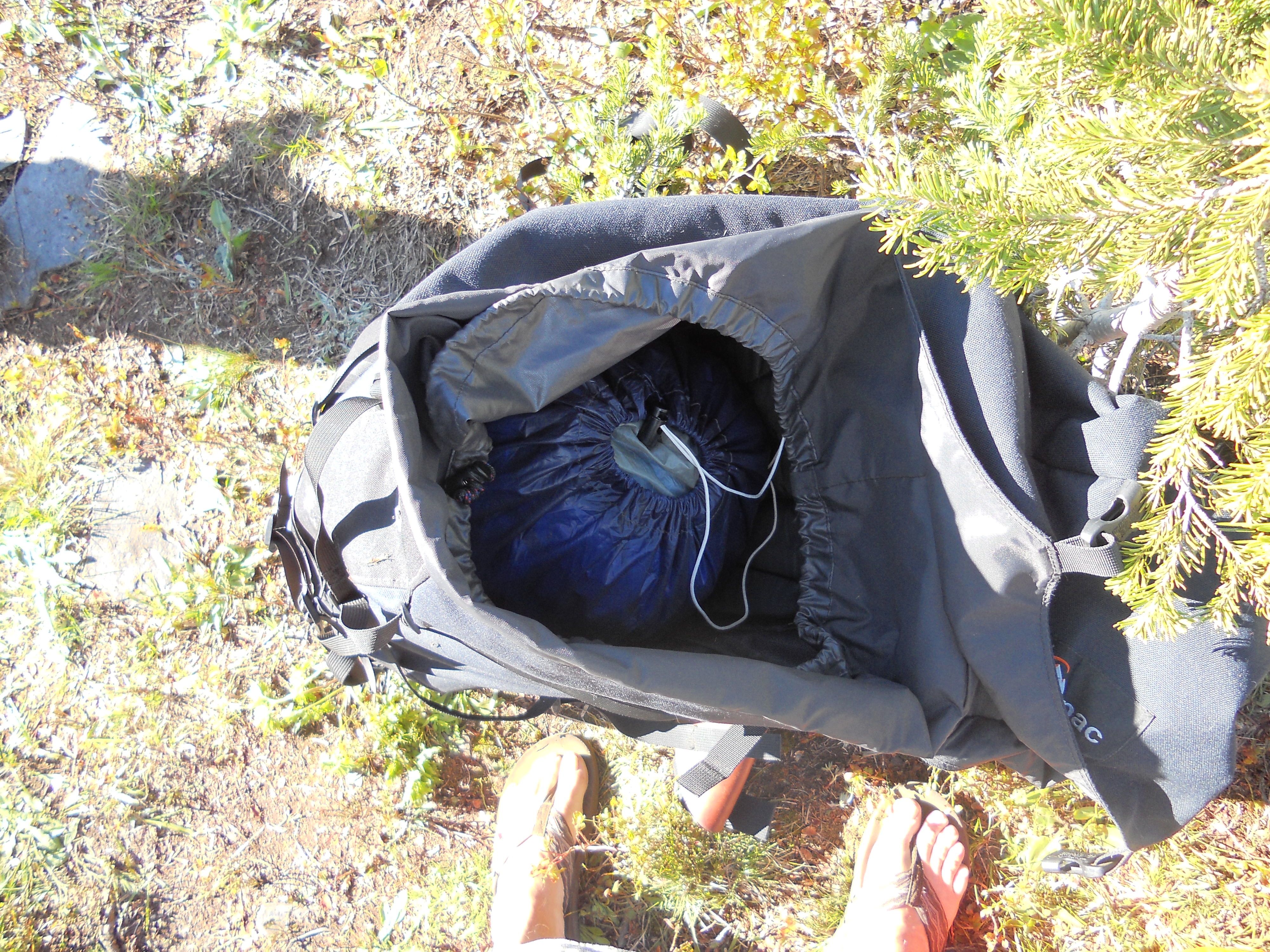

7. Grab top and bottom of stuffsack and simultaneously push and pull till the
stuffsack is horizontal and squished into the bottom corners of the pack.
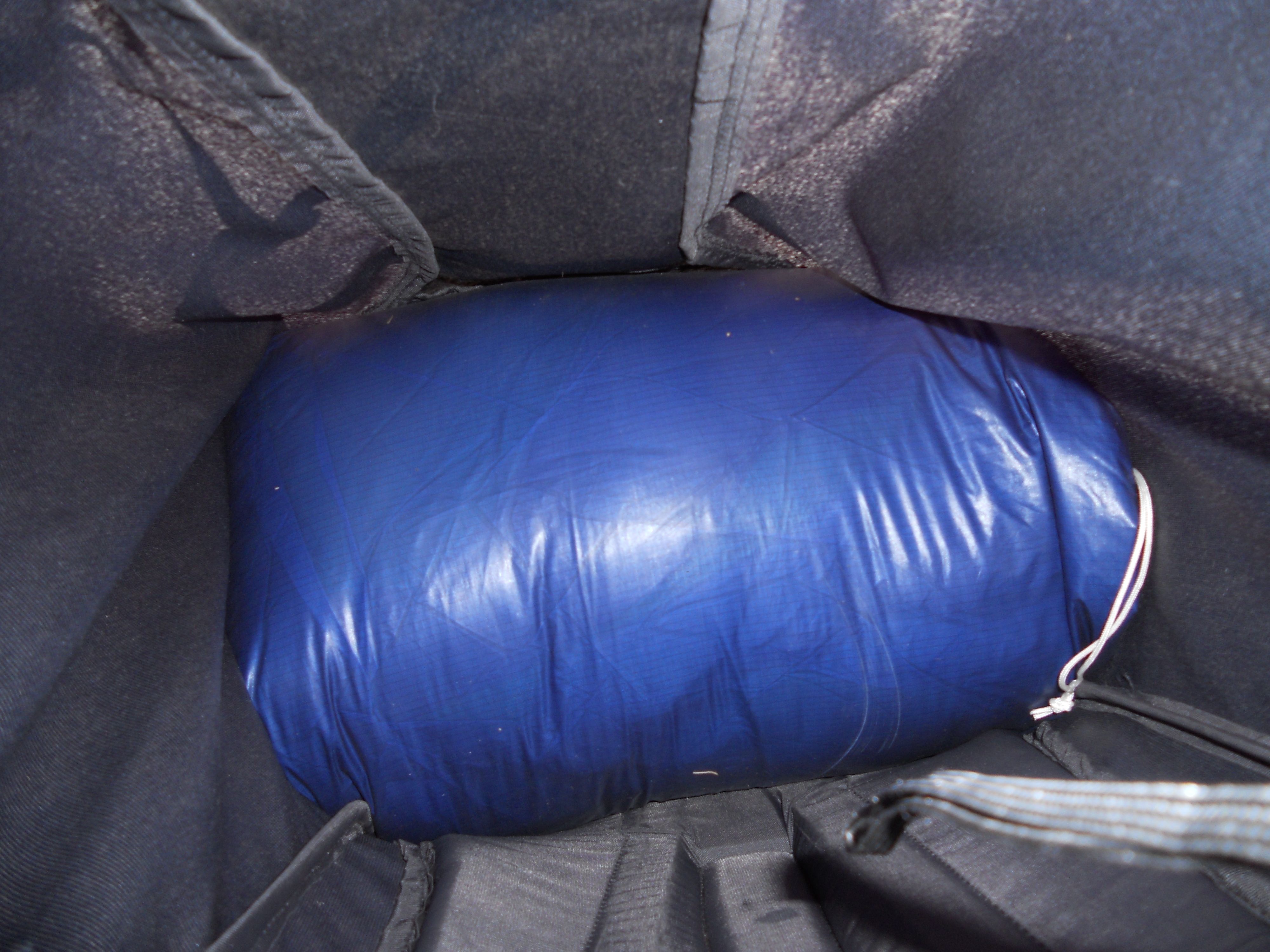
8. Smaller gear needed during the day can be in color coded stuffsacks placed on top of the sleeping gear.
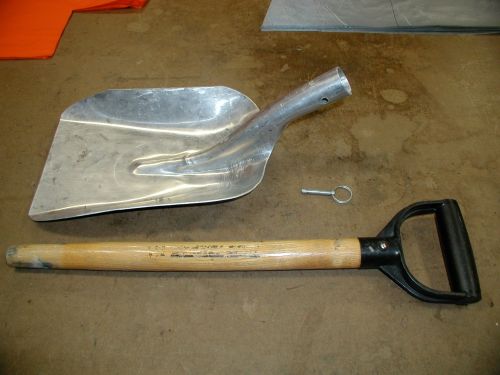
I bought this aluminum shovel, True Temper Brand, from the Truckee Hardware Store. With
a very sturdy blade and handle, (more so than the majority of avalanche specific shovels)
it can be used to chop ice, push with your feet and lever out blocks. Things that break
plastic and the thinner versions of metal shovels.
To make it transportable in a pack, I drilled out the rivet holding the blade to the shovel and replaced it with a removable pin.

Old school mountaineers used metal nails, hobnails, in the leather soles of their boots for
added traction on ice.
Here is a method to do something similar with your running or hiking shoes. You could even
carry this lightweight kit with you into the backcountry for icy trails.
1. Small 1/4″ bit driver. The one shown is mostly plastic and the rest aluminum so
weighs very little. Some multi-tools have this on them as well. A tiny wrench could work.
Chuck one in a drill for quick at home attachments.
2. 1/4″ hex head sheet metal screws. Use the shortest ones you can buy so it won’t go
through the sole to your feet.
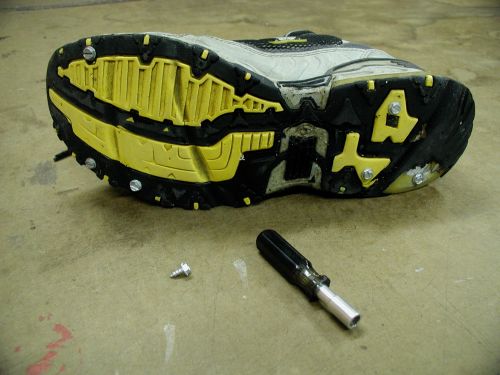
Just twist them in. You can remove them for the summer season or when you need to walk
across someone’s hardwood floor.
Develop your own “Ten Essentials” for your trips.
Here are my categories.
Water
Food
Clothing and Shelter
Navigation
Light Source
Knife and Tools
Sun Protection
Fire Making
First Aid
Communication
Each time I head out, I take a quick look at my list and match
categories with items suitable for the activities expected.
Examples
Half Day Hike in Know Territory:
Water– Pop bottle with water in pack or back pocket
Food – eat before I go
Clothing and Shelter – Fleece hat and garbage bag in pocket or pack.
Navigation – known terrain, not needed
Light Source – button flashlight “Fauxton”
Knife and Tools – pocket knife
Sun Protection – sunscreen before I go
Fire Making – bic lighter or firesteel, toilet paper
First Aid – (Very small), bit of tape, aspirin, large dressing
Communication – cell phone, whistle
All day or night ski tour, new territory:
Water – Quart and 1/2 of water, metal cup to melt more or for hot drinks
food – lunch, extra energy bars, energy drink or juice in one of the water bottles (also makes “bread crumbs” in the snow for navigating back), tea bags, (fruit and water in car for return)
Clothing and Shelter – Layered clothes of synthetic and wool, gloves and spare mittens,
hat, waterproof parka and pants, spare socks, ski boots, gaiters, vbl socks silnylon tarp and foam sit pad for stops and emergencies.
Navigation – Gps, compass, topo map in plastic.
Light – LED headlamp with fully charged batteries, spare batteries, couple of “Fauxtons”
Knife and Tools Pocket Knife, Screw driver that fits ski bindings, Duct Tape,
Wire, Spare binding screws, Steel wool for filling loose binding screw holes,
Cord (for emergency rope climbers, towing, building a rescue sled or shelter building,) pocket wood saw for trail maintenance
and fire/shelter building,
avalanche shovel, avalanche beacon, avalanche Probe, ski Skins and skin wax, ski poles, red wax, wax scraper
Sun Protection – Sunscreen, brimmed hat, sunglasses, Clown White for extreme ‘sun on snow’ days.
Fire Making – Matches, bic lighter, Fire Steel, cotton balls rubbed with Vaselene, toilet paper, maybe a pop can alcohol stove
First Aid – Tape, Bandaids, 2nd Skin, Super Glue, dressings, aspirin and Ibuprofen, hand warmers.
Communication – Cell Phone, Two Way Radios, Signal Mirror, Whistle, Paper and Pencil
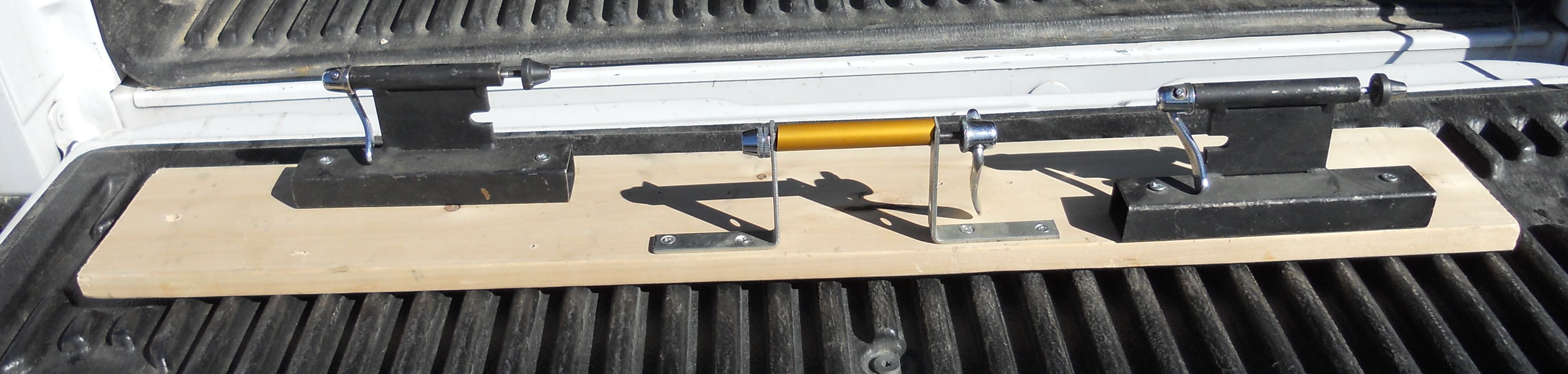
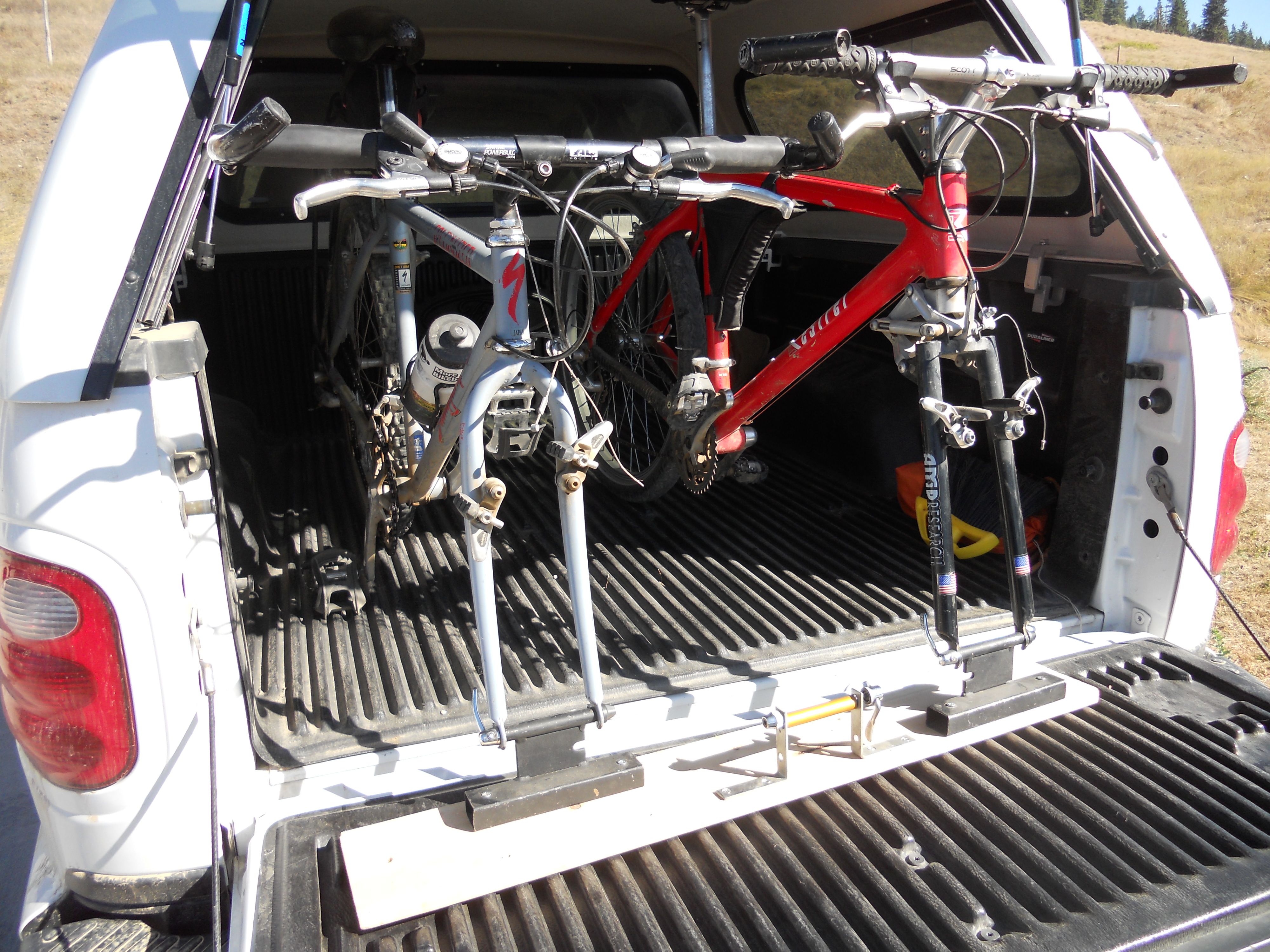
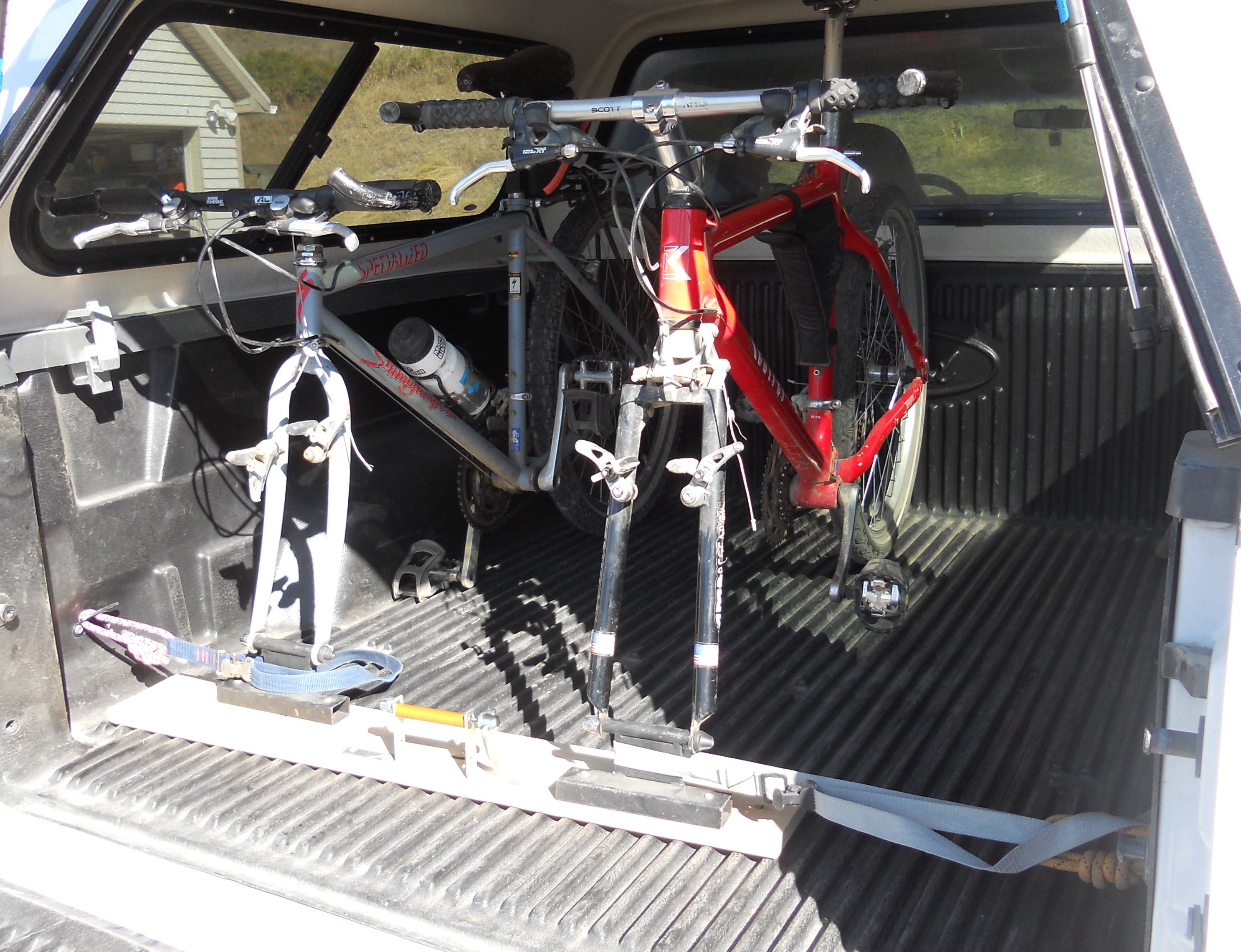
A simple back rack for a pickup bed. Made using either an
extra hub quick release with two angle braces and a piece of tubing for a spacer or commercial attachments. Having them screwed to a board which is loose in the truck bed, makes it easy to put the bikes
on while on the tailgate. Then you can slide the whole thing to the positions you
want and a couple of straps held everything in place.
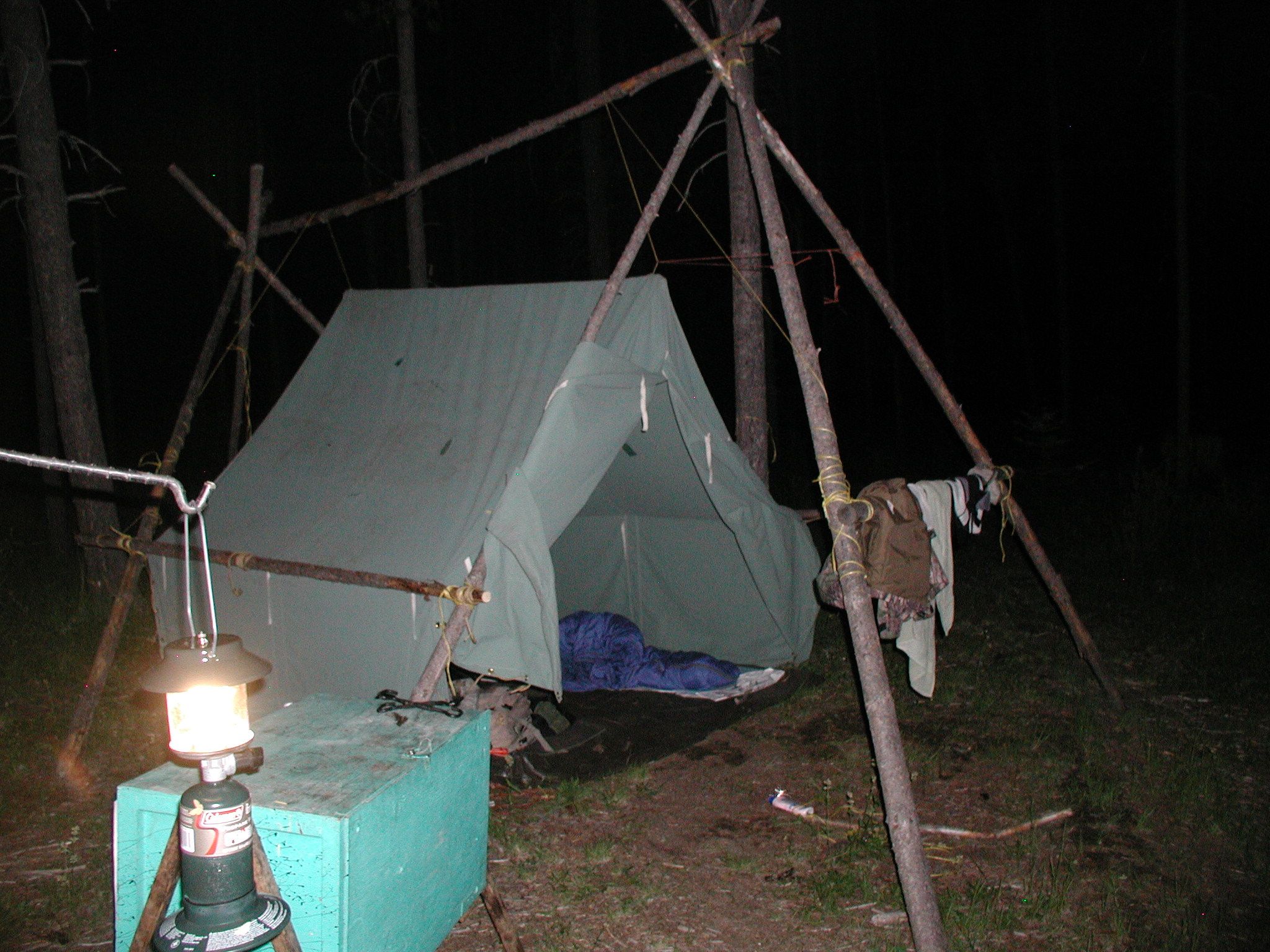
Summer camp.
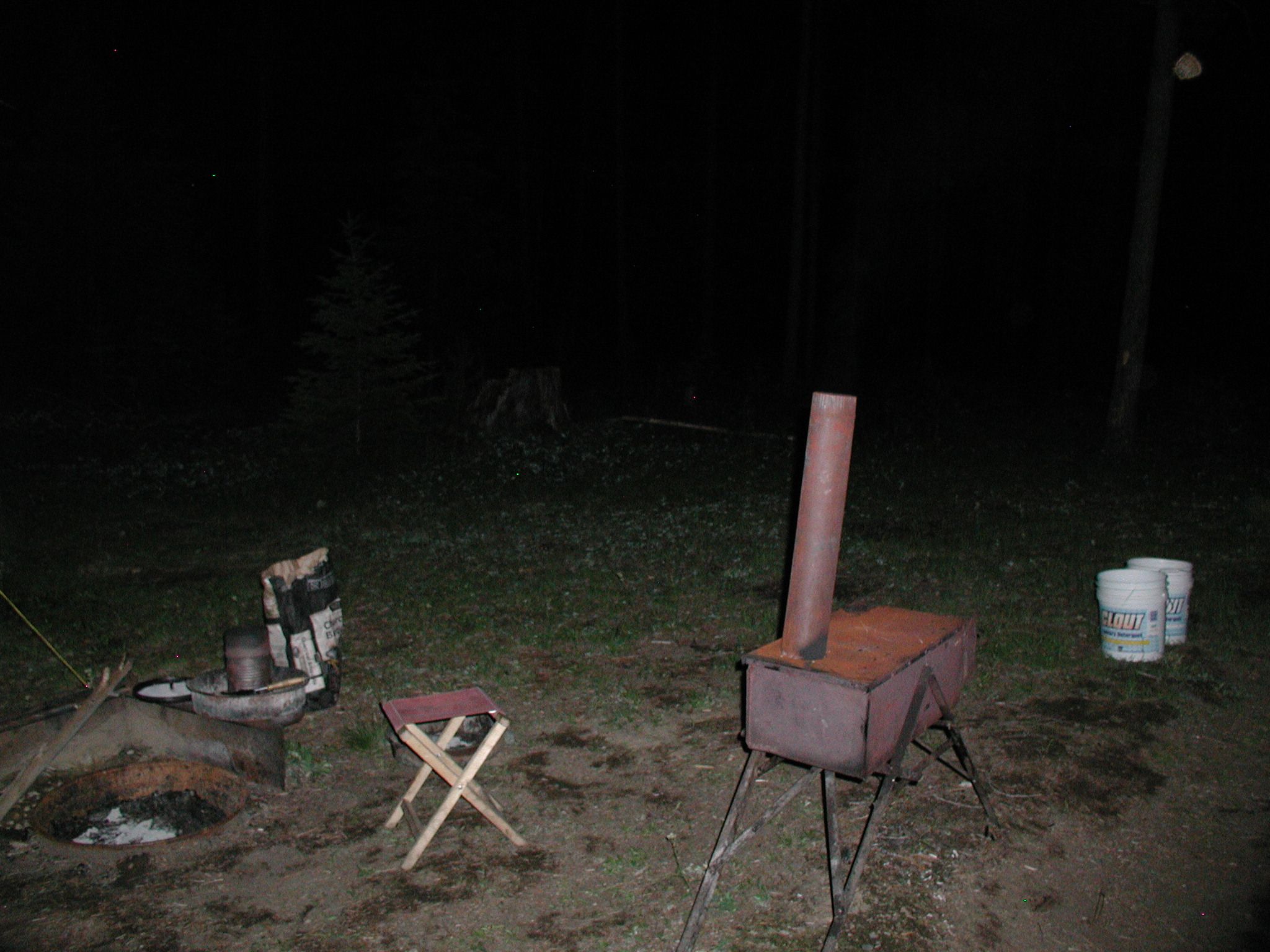
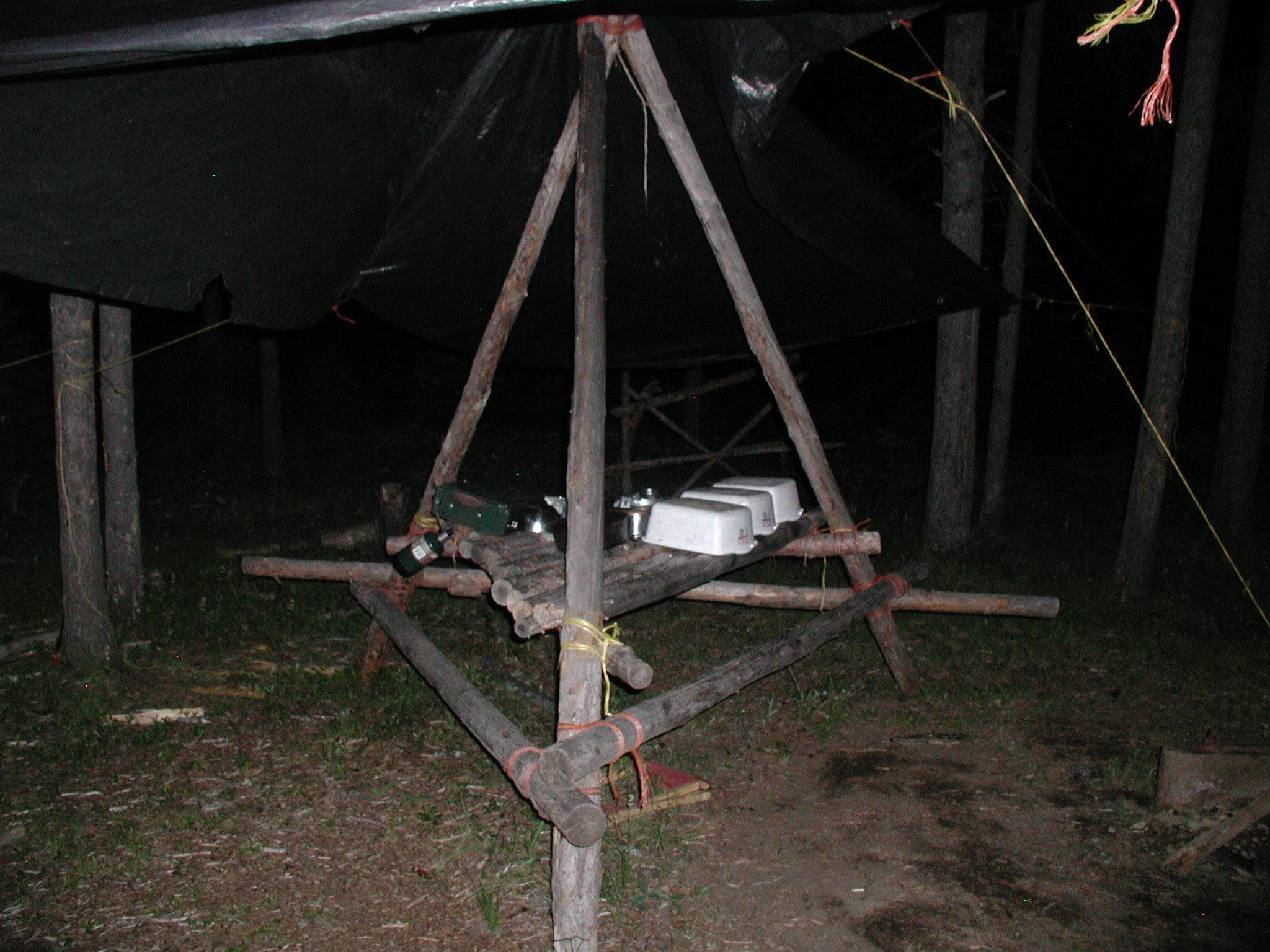
Lashing, dutch ovens, sheep herder stove, swimming and fishing.
Lodge pole tent poles from 20 years ago!

Filed under Oware Backpacking Gear, Tips for the Backcountry
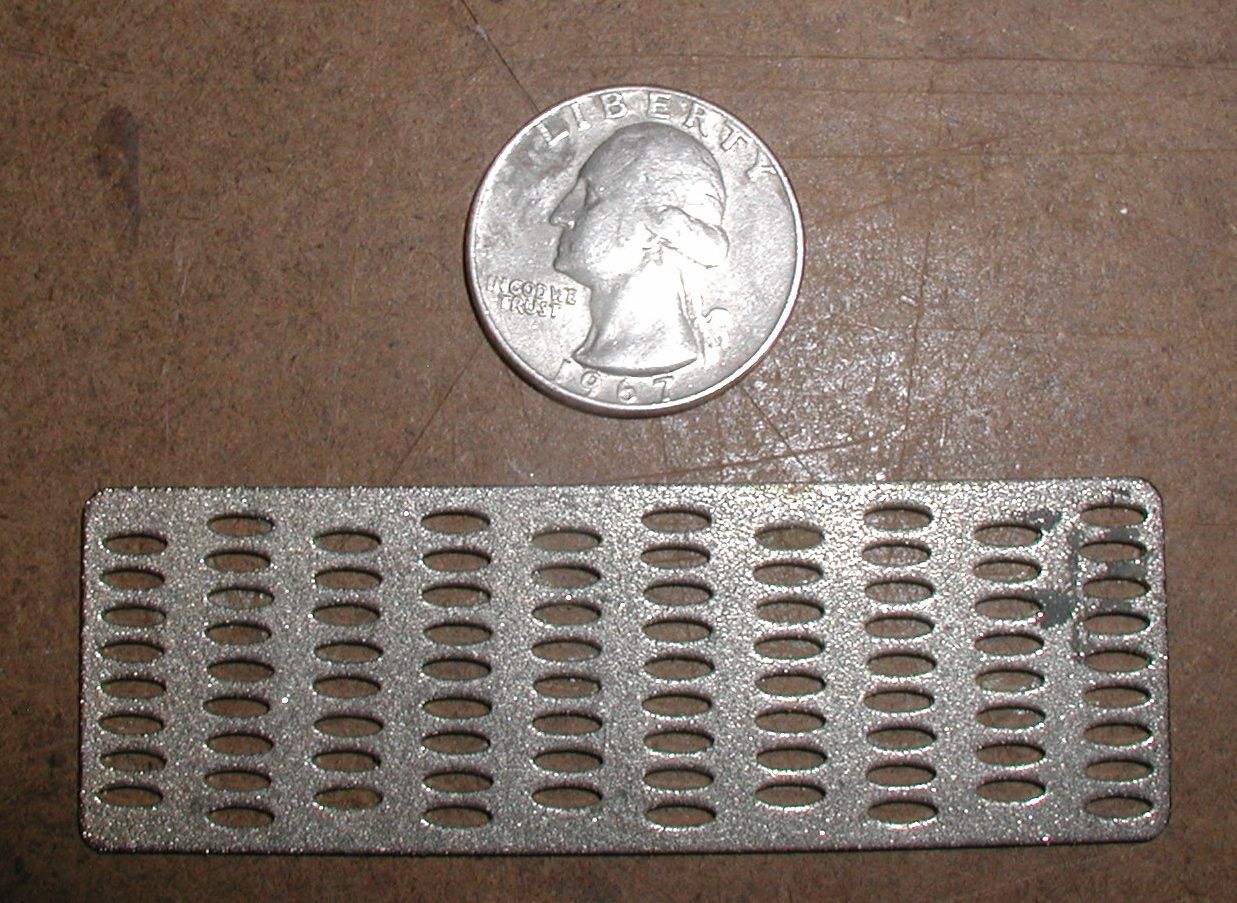
Found a small diamond hone at the hardware store. Took off the plastic on the back
and it makes a very compact and lightweight stone for resharpening a knife.
Weighs just .4 ounces and fits in a wallet.
Filed under Do It Yourself, Tips for the Backcountry
 Oware
Oware 